How the rich protect community wealth in, “THE HAMPTONS”

hampton

How the rich protect community wealth in, “THE HAMPTONS”

by: Dr. Samori Swygert

Lifestyles of the Rich and Famous was a nationally syndicated TV show that aired from the mid 1980’s to 1995.  Many remember the host Robin Leach, he spoke with a distinct accent as he showcased the enormity of opulence, and excess of wealthy individuals.

Nestled deep in the most posh, and private enclaves of high society, rests “The Hamptons of New York State”.  This locale is home to some of the wealthiest in New York, and America.  The caliber of residents in the Hamptons extend from some of the most ostentatious to the more reserved and humble, but the common denominator is wealth.  Jay-Z and Puffy even brag about splurging in the exclusive and decadent luxuries of the Hamptons.

However, there is more to this side of town than mansions, and costly estates.  It is important to understand the philosophies, strategies, and practices that the wealthy implement to protect their lifestyle.  I read an interesting article in this past Friday’s (8/1/14) New York Times.

The article detailed how the residents of East Hampton defend their economic territory from outside chain or “formula stores”.  They defined a formula store as a store that has at least 15 other stores nationwide, and have “the same merchandise and decor”.

The majority of the residents patronize community owned businesses.  They have a rapport and an economically intimate relationship with the community’s proprietors. The devotion to the community is goes beyond unspoken trust, and familiarity.

This wealthy community institutes economic policies that guarantees the recycling and filtering of money back into the community.

The strategies

The following strategies were discussed.  First, the East Hampton community sets forth town zoning code. This code stipulates that any outside business that wishes to buy/rent to establish operations within the town must first get a permit that encompasses detailed planning.  The company must submit to a complete “architectural review” from the town.  A public hearing must be conducted for all to judge and evaluate.  A traffic study must be conducted to see how conducive the business operations are to traffic flow and city transportation.  Lastly, a 2% preservation tax is applied to each and every real estate transaction.  According to the article, this has amassed a whopping $250 Million dollar coffer, for a town population of 21,000.

The author of the New York Times article, Joseph Berger, noted how they utilize the $250 million dollar preservation tax.  The $250 million dollar preservation coffer is “used to buy woodland, wetlands, farmland, and waterfront property; more than 40% of town land is protected”.  In essence, this solidifies and guarantees the sustainability of the town.

Dr. Claud Anderson

Many people are familiar with Dr. Claud Anderson, and he has a growing following each day.  This is exactly what he’s been telling African Americans to do since he wrote his first book, Black Labor White Wealth.  He’s given step by step application on how to practice and master group economics and community security.  He goes further in depth with his follow up book, Powernomics.

This article caught my eye as I read through the detailed strategies of how they manage their community economics.  When you permit chain stores, and outsiders into your community without any economic accountability to the community, your money may leave, and never comeback.  That is a siphon.

However, when the majority of businesses are operated by the residents, and resolutions are passed to procure a percentage of revenue from outside business, that’s recycling of dollars.

The author also gave an example of a 7-11 convenience store that tried to open in Montauk, a town over. Residents constructed a Facebook page devoted to a strict boycott of the 7-11, and the local Chamber of Commerce even “protested”.

The residents expressed an overwhelming sentiment to preserve the community identity and reflection of the culture.

I will attach the story below so you can read at your leisure and share.  This was really insightful and made me wonder, “why does Dr. Claud Anderson get so much push back from some segments of the African American community, when wealthy communities successfully institute the exact same practices to ensure their survival?”

This is how we are to protect the “supposed” $ 1.1 Trillion dollars that we’re purported to spend in the upcoming year.

http://www.nytimes.com/2014/08/01/nyregion/a-fight-to-shackle-the-chain-stores-in-east-hampton.html?_r=0


2 Reasons why we haven’t advanced socio-politically

edmund

2 Reasons why we haven’t advanced socio-politically

By: Dr. Samori Swygert

Dr. Boyce Watkins wrote a great article for the website Financial Juneteenth. He discussed 5 reasons why he feels black men haven’t advanced over the last 40 years. I want to add an additional car onto his train of thought.

I’m postulating that 2 big reasons most socio-political movements within the black community fail are due to 1) an addiction to money and consumerism 2) the increasing focus on individualism versus community oriented efforts.

Why do I feel these 2 reasons are responsible for incomplete socio-political achievements in the black community? I’ve taken time to survey the numerous movements, marches, boycotts, vigils, prayer breakfasts, and protests. The duration of action, or the staying power of our efforts are typically ineffective because a substantial portion of us are not willing to sacrifice, endure discomfort, and be inconvenienced for a protracted period of time.

Addiction to money and consumerism

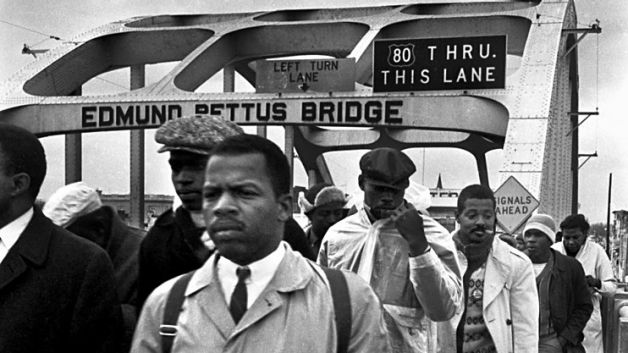
The addiction to consumerism and patronage debilitates any and all efforts when trying to accomplish goals. The Montgomery Busboycott was only successful because the African American demographic in that area refused to ride the buses for several months. This resulted in the crippling and dismantling of the transportation authority in Montgomery, Alabama. Our ancestors were committed to the cause in lock-step fashion. Were they inconvenienced? Did they have to make due through bad weather? The answer is yes to all of the above questions. However, their temporary sacrifice led to a permanent change in the bussing policy.

We must be completely committed and dedicated to boycotts and divestment of funds in institutions, facilities, and stores that either exploit, disrespect, or permit the subjugation of our people. This is exactly what the Anti-Defamation League does, the same thing the LGBT community does, and etc. Sure a store or brand may sell your favorite shoes, handbag, suit, sneakers, jewelry, cuisine, liquor, and etc. However, is that material item worth your human dignity?

Are we willing to financially empower the very people that seek to keep us subservient and noncompetitive? Can we tame our appetite of consumption? Fashion designers will spew an assortment of disrespectful intolerable comments about blacks, but some of us will still patronize their goods as if they weren’t talking about us, just to look fly.

We can’t give any credence to black entertainers, “purchased politicians”, or media-types. They have slick explanations why they won’t support boycotts and divestments. Many of them are defectors because they have endorsement deals or contractual obligations with these companies. Thus they will never offend the companies responsible because their money is at risk. Their loyalty is to the hegemony, not their heritage. Companies will create various incentives and bait to lure you away from your agenda. The moment we acquiesce and succumb to the allure, we demonstrate that our humanity is for sale.

This was illustrated with the California NAACP leader with Donald Sterling. He wasn’t able to forgo his addiction to cash. Also, we can have an excellent movement and all it takes is some dumb bought and paid rapper to go against the grain that co-opts the mind of impressionable youth that will side with him, but his only intention was to get paid by his corporate DON.

Individuality versus Community

Our attempts are also sabotaged by self-inflicted wounds of individuality. Our ego, narcissism, and selfishness prevents us from achieving in formidable success. Many of us take 100 mg of “Vitamin I” every morning, everything has to revolve around “I”.

This compromises and undermines any potential movement or progress as a group. Smart individuals understand that politics is a game of numbers. Show me your vote count from City Mayor to the President of the United States. I’ve seen us self-destruct and politically implode because of temporary short-sighted issues. We focus on the small issue which divides and derails us from achieving the main goal. When we lack solidarity and cohesiveness, we weaken the urgency and seriousness of our message.

Parents may disagree but they must show a unified front on house rules to the children. The parents then mitigate and resolve the other issues in isolated private time.

The LGBT and Latino community are highly successful to their goals because they’re unified, uncompromising, and relentless to their commitment to task. A dedicated and unified front forces their issues and agenda to the forefront of a nation’s itinerary.

This focus on self will weaken our collective voice politically, and economically. The focus on self dissolves our community and makes us susceptible to predatory and oppressive entities that seek to dominate us. Many socio-politico factions champion our regression to the “good ole days”, which weren’t good for us at all.

In closing, I feel we need to identify the major things we can agree on that will propel us forward by economic first, and secondly by politics. We are in a very fragile state of existence. Gentrification is happening all over the country, civil rights achievements are being reversed regularly, the prison industrial complex is booming, black unemployment is still at a critical level, college costs are rising, and global competition is at critical mass. We must put aside our ego, help our brethren, be receptive to help, appreciate help, be ready to sacrifice pleasure for an extended period of time, and MOVE!

smart dust

smart

Do you know what “SMART DUST” is?

By: Dr. Samori Swygert


Omnipotent (all powerful), omniscient (all knowing), and omnipresent (present everywhere), these three terms are typically used to describe the attributes of God in many faiths and religions. Mankind is rapidly pursuing obtainment of these deity defining terms.

We’ve created the most sophisticated weaponry of mechanical, nuclear, and biological capacities to account for the quest of power. We’ve devised some of the most intricate, complex, and hi-tech methods of transportation from your car to MAC speed jet engines, to drones, to space shuttles that promise to usher humanity to space missions to Mars. This is our effort to demonstrate omnipresence. Lastly, we’ve made everything intelligent or smart: smart phones, smart computers, smart cars, smart refrigerators, smart chips, I-robots, and nano-technology to plead the case for being omniscient (all knowing).

If you’re familiar with my writings you may notice I love keeping up with environmental issues and the advances in technology. I was reading a book on Singularity by Ray Kurzweil, a leading expert in the field of robotics and human interface. He began discussing something called “Smart Dust”. He further explained how this smart dust would be disseminated all over the earth for supreme intelligence.

I began doing some online research about this technological advancement and was blown away by the potential, magnitude and implications of this “smart dust”. Basically smart dust are these tiny particles that are like the size of a grain of rice and are currently being made smaller than that. They possess microcomputers that sense and detect a variety of input. They will sense sound, temperature and climate, altitude, vegetation, terrain, position, molecular composition, motion, and an assortment of things. The capabilities are only limited to the imagination and ingenuity of the designer.

The objective is to spray this material over all cities, embed them in infrastructure, devices, and more with the objective of creating a smart society. This would lead to the monitoring of every square inch of earth. Society can then be measurable, predictable, and ultimately choreographed to the person or group in control of this vast array of knowledge.

I happened to watch the movie Transcendence with Johnny Depp and I see a direct parallel with what they were showing in the movie. I won’t go further to avoid spoiling the plot for you, but it’s a worthwhile film. How would you feel knowing that every single aspect of your life will be officially “bugged”? We are almost there.

I was reading some articles from MIT’s Technology Review and they actually have developed smart dust to be incorporated into the human brain and other body parts.

I’ll let you decide for yourself. Below are some articles and a Youtube video to expand the conversation.

What are your thoughts on this? Are we going to far?  Is this what they’re spraying in the air and we think it’s plane exhaust?

http://youtu.be/GvdGggusRYU

http://www.cnn.com/2010/TECH/05/03/smart.dust.sensors/

http://www.technologyreview.com/view/517091/how-smart-dust-could-spy-on-your-brain/

Will Hillary Clinton push for reparations if she runs for presidency?

hill

Will Hillary Clinton push for reparations if she runs for presidency?

By: Dr. Samori Swygert

When current President Barack Obama was elected as the President of the United States, America arrived at a new political plateau in the terms of cultural diversity. Many people were filled with joy, pride, and had a self-imposed paradigm shift on racial equality. Yes, the first African American President was elected, and an all African American first family moved into 1600 Pennsylvania Avenue, Washington, D.C.

Initially, President Obama was greeted with much fanfare from the African American community. The President had “swag”, he exuded confidence, he spoke with eloquence and sophistication, and he wooed many in white communities.

However, time progressed and many of the blacks that voted for President Obama grew disenchanted because they didn’t see the change they “expected”. Political and economic times turned turbulent, and many blacks were hit hard in the recession. Many looked to the President for a sign of relief, a flotation device, a financial life jacket, only to see other factions of society being rescued and attended to. Fast forward, President Obama’s approval ratings have taken hit after hit and many blacks have been asking, “who did I really elect?”.

Now it’s no secret, President Obama has been stone-walled in several attempts by a majority republican congress. They fight him tooth and nail on every single issue. I’m sure he couldn’t choose the soap or toilet tissue he wanted if they had a say in the matter. Nevertheless, many blacks express buyer’s remorse for our Commander in Chief. This feeling is primarily spawned by President Obama’s conspicuous attention to the Latino and LGBT community.

Many African Americans feel slanted by a less motivated effort of the president to address our concerns. President Obama has also asserted that he wouldn’t address issues pursuant to reparations for African Americans. That’s okay because although I disagree with his position, I will always respect another person’s opinion.

Moving onto Hillary Clinton

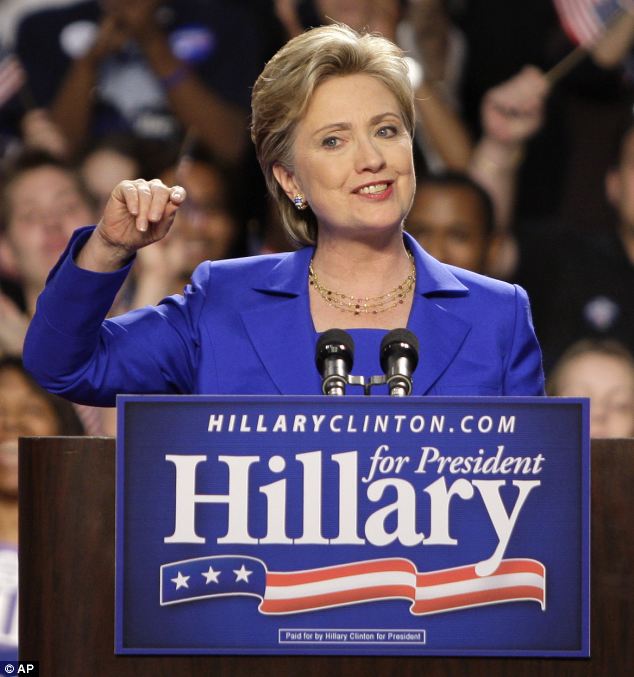
Many women have an affection for Hillary Clinton because she was the First Lady of Bill Clinton. She is also a “symbol” of political diversity. She staked her claim and showed that she has a bite and bark when she ran as a presidential candidate. She also demonstrated her ability to face the fire in the Benghazi fiasco. Hillary portrays a bold political spirit that many women can and want to identify with. Some women are attached to her via sympathetic strings from former President Clinton’s sexual infidelities.

Hillary Clinton is skillfully posturing herself to be a formidable presidential candidate again. I won’t applaud or critique Hillary until she announces a formal bid later on, and clearly explains the goals and mission of her political platform. I also want clearly outlined plans and positions on where she stands on issues germane to the African American community.

Why am I saying this? I’m saying this because I do see how the African American community fell in political love with President Obama based on symbolism and “silent expectations”. Well in this era, the future belongs to fast learners. This time the African American community should be in the faces of the potential presidential candidates asking them specific questions on Affirmative Action in relations specific to blacks.

I also want to know will Hillary Clinton support reparations for African Americans who’s descendants were forced into slavery to build the economic power base that America has morphed into. Centuries of free labor by blacks is the financial DNA of America’s success, and the rejection and denial of it is a crime.

Will Hillary Clinton help pursue the procurement of reparations for the descendants of the victims of slavery? If her answer is no, I would like to know why, and why she deserves our vote in the upcoming election. If she is able to champion the causes of the Latino community, LGBT community, and silently pander to Wall Street, then hear our specific demands in equity and fairness.  We want specific answers, not broad generalized rhetoric that blankets everybody like human rights and civil rights.  Where do you specifically stand on reparations for blacks?  Will you help procure these funds and policies?

Sidebar, we as African Americans need to be prepared with a specific itinerary, and itemized agenda if this is what we want.

This question goes to all democratic candidates because a pattern exists where African Americans tend to vote democratic. This evolved in part because many policies and legislation that Republican candidates advocate for lack congruency with the concerns of the African American electorate.

However, I pose this question because a subconscious affinity and affection is extended to the Clintons’ by “some” of the black community, and we need to move beyond symbolism and get this next election right! If other voting demographics can garner the attention and action by the President, then we demand that our expectations be met also. Hillary can’t bring Bill to the next NAACP meeting to play the saxophone and think they have our vote in their pocket. That’s it, that’s all.

True story: prison labor increased Texas unemployment rate

chain gang

True story:  prison labor increased Texas unemployment rate

By: Dr. Samori Swygert

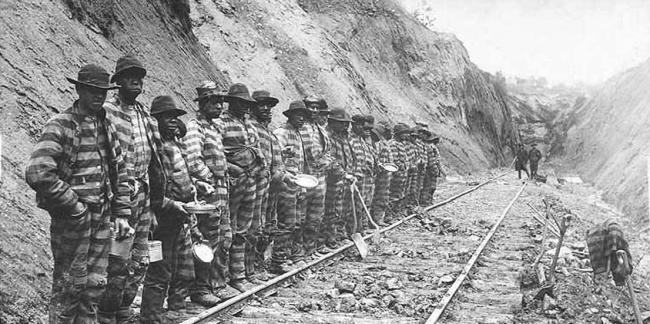
We often hear about “the prison industrial complex”. Some of us just shrug it off and try our best to avoid being arrested and incarcerated. We inform our children to avoid inappropriate and illegal behavior that would land them in prison.

However, this is only a fraction of what the prison industrial complex encompasses. In fact, you can be the most law abiding citizen and still be affected by this exploitative system.

I want to share a true case study that occurred in the mid 1990’s that I ran across last week. I and a few of my colleagues have been doing some research into this system and managed to excavate this diamond in the rough. Some of you may be familiar with the story if you’re from Texas.

In the mid 1990’s Leonard Hill was the owner of Lockhart Technologies of Austin, Texas. His company produced circuit boards and other system parts for computers and electronics. Enticed by the opportunity and potential to increase revenue, he turned to an alternative form of human resource. That alternative form of human resources was prison labor.

During the 1990’s another private prison group was on the scene. Wackenhut private prisons had established prison operations in Texas. Currently, the company went through new business transitions and is renamed “The Geo Group”. This group maintains prison facilities in North America, the UK, Africa, and Australia. They operate mental institutions, detention centers, immigration facilities, and prisons.

Now back to Leonard Hill and Lockhart Technologies of Austin, Texas.

Leonard made a deal with Wackenhut at the time to have his electronic components manufactured by prison inmates in the Wackenhut facilities for 1 and 2 dollar prison wages. This decision to relocate his operations to prison production relieved him of paying any and all benefits and obligations such as health care, holiday pay, and on the job injuries. He no longer worried about maternity leave, absenteeism, lateness, sick days, vacation, and all the other expenses that an employer has to factor into their payroll budget.

Consequently, when he compared and contrasted the risk benefit analysis in terms of dollars and cents, he fired his 150 employees, and multiplied his revenue stream exponentially.

Let’s do some math

If Leonard Hill was paying his employees $10.00 per hour with a typical 40 hour work week, that translates into $19,200 before taxes. Let’s multiply that by 150 employees. This yields a payroll expense of $2,880,000 annually. By shifting his operations to the private prison labor sector, Leonard Hill pockets almost all of his payroll expenses as income.

So what does this mean? You’ve heard it before, prison is big business. It’s not enough to be the perfect law abiding citizen to be affected by the prison industrial complex. Remember we’re in economic times where the greed and exploitation component of capitalism is in full effect. The exploitation of prison labor can destabilize the job market for law abiding citizens that play by the rules. You may operate within the legal realms of your daily activities, but that doesn’t guarantee that your “safe and comfortable” job will be there tomorrow. Your domestic affairs can be instantly dismantled if your company shares the same philosophy and ideology of Leonard Hill.

This underscores the importance of becoming financially astute even if you don’t have a business degree. This also pleads the case for entrepreneurship and community based business models. These type of endeavors are proactive, and preventive measures to reduce the instability of the job market. Remember employers don’t hire for morality, they hire for money. Can they use your energy, time, and talent to increase their profits at the cheapest pay rate possible?

You can find this story and others like it in the link below.

https://www.prisonlegalnews.org/news/2010/mar/15/the-prison-industries-enhancement-certification-program-why-everyone-should-be-concerned/

12 Years a Slave is still true today in these 2 ways

12

12 Years a Slave is still true today in these 2 ways

By: Dr. Samori Swygert

I watched 12 years a slave this weekend for the 3rd time. The first time I viewed the movie in the theater, my mind was flooded with several thoughts. I had drawn so many parallels between what the movie tried to convey historically and what is still present today. I never took time to write about it because articles about the movie were inundating the web at the time.

I will share 2 perspectives of the many correlations I gathered from watching the movie.

Safe and comfortable African Americans

Solomon Northrup would be considered privileged in comparison to his southern brethren in slavery. Solomon resided up North and lived as a free man with a wife, kids, a home, a profession, and was afforded the liberty to conduct his life in a manner that was rather “safe and comfortable”.

The harsh realities of the institution of slavery wasn’t a true reality for him and his family. The phrase, “out of sight, out of mind”, appeared to fit Solomon’s character. Being that he wasn’t exposed to slavery, violent and back-breaking working conditions, or subpar living standards, he conducted his life as an unconcerned black citizen. The tree of slavery hadn’t fallen in his forest of comfort yet.

However, unbeknownst to him, he would be tricked and double-crossed into the violent and exploitative system of slavery. He awoke in chains to have his humanity, masculinity, and identity flogged out of him. He was now captive and submerged into the brutal world of slavery that his brothers and sisters in the South had endured while he was “safe and comfortable” up North.

This speaks volumes to many of us that feel that we’ve “arrived”. There is a substantial portion of African Americans that currently feel like they’ve “made it”. They’re “safe and comfortable”, they want to live life in denial of the precarious situations that loom about, and that many of our fellow brothers and sisters are in. These are our “see no evil, hear no evil” family.

These individuals live in avoidance, and trepidation of “rocking the boat” when it comes to pertinent issues that devastate the black community. They typically refrain and restrain themselves from involvement in a situation until they or a family member become a victim of the situation they choose to ignore.

When they lose a daughter to gun violence, or their house gets foreclosed, or they get furloughed, or son gets arrested, that’s when they want the whole world to stop and pay attention. I call them conditional activist and convenient participants.

Sadly, they must get flogged by life and society to gain appreciation and respect for the struggles of their brethren.

This is the perfect illustration of, “a threat to justice anywhere, is a threat to justice everywhere”. Why wait until it comes to a theater near you?

Left Hanging

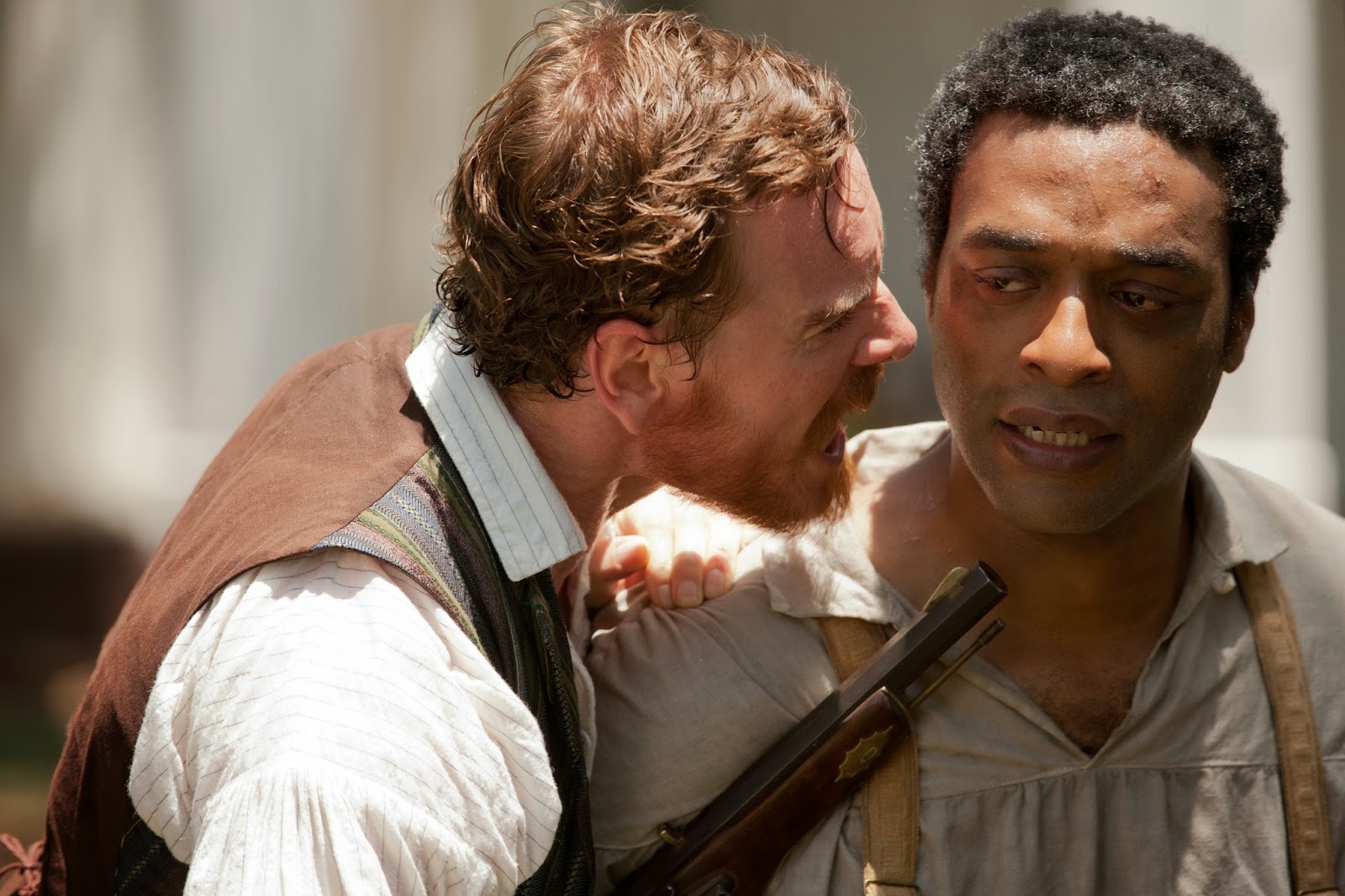
One of the most compelling and jaw dropping scenes of 12 years a Slave was the scene when Solomon Northrup was hung from a tree. Solomon had a dispute with one of the white overseers. This dispute resulted in him being hung from a tree in the middle of the living quarters for everyone to see. This violent act was done to incite fear into others, display power, dominance, and authority of the overseer.

Solomon was left hanging for the entire day while alive. His last breath was only prevented by the strength and flexibility of his toes.

However, a unique psychological dynamic was revealed. The slaves on the plantation did nothing. They literally watched this man suffer and fight for each breath. They looked at him, the children played around him, and they conducted their daily chores as if he was invisible. The people were unarmed, devoid of courage, hopeless, fearful, and powerless. Only one person made a meager effort to see about him.

I think this is symbolic to contemporary times. We’ve lost a great deal of power, and thus we’re not capable of providing any substantial form of support for anybody that speaks out about our plight as African Americans. Many of us are scared to express displeasure, discontent, or reveal the inequalities that affect us. This allows African Americans with guts that speak the truth to be silenced and suppressed. However, some of us will continue to play games, watch TV, dance, get intoxicated regularly, focus only on our careers, shuck-n-jive, and live an unassuming status quo life.

However, other ethnic and social demographics will make noise to get the oil on their squeaky wheels, or untie their noose.

Nobody is telling you to go get a gun and be violent. Our ancestors are asking us to get involved. Attend your community meetings, be receptive to news, share information, share networks that can empower your neighbor, uplift the down-trodden, attend your city planning meetings,  have a say, and fight for a better life for our posterity.

It’s inevitable that our silence and apathy will leave us all hanging like Solomon.

The Story of Solomon Northrup is a unique case study of “victim inspired activism”. Once released, Solomon dedicated the rest of his life to exposing the vestiges of slavery,…………something he’d never done before being a slave himself.