
This is the audio supplement to the blog article: Resurrecting femininity in black women. This audio session addresses the social degradation and exploitation of women by media, Hollywood, and the detrimental effects on black relationships.
This is the audio supplement to the blog article: Resurrecting femininity in black women. This audio session addresses the social degradation and exploitation of women by media, Hollywood, and the detrimental effects on black relationships.

This is the audio supplement to the blog article: Problem with the standards of beauty. This audio session addresses issues with cultural pride versus expected social norms when it comes to physical aesthetics.

This is the audio supplement to the blog article addressing police brutality. This also considers methods and strategies to reduce brutality and bridge relations between cops and the communities they patrol.

This is the audio supplement to the blog article Adam where art thou. This tackles the crucial issue of fatherhood versus absenteeism, neglect, and responsibility.
This is the audio supplement to the blog article entitled : A financial lynching of the 99%.
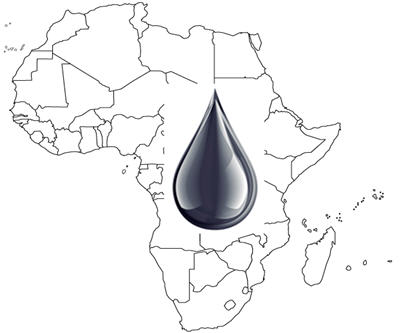
African resources in the crosshairs of global capitalism
By: Dr. Samori Swygert
This month’s edition of Worth Magazine, a financial magazine, highlighted potential investments for 2014. I reviewed some of the hotspots and focal points of investment. The magazine highlighted Kenya and Mozambique as potential investment targets because of their untapped oil reserves.
I then researched the U.S. Department of the Interior, and the United States Geological Survey to correlate the magazine’s prospects with the data collected by America. The wealth and resources of Africa are still abundant despite its’ history of plunder and pillaging.
Understanding the math
Before going any further, it’s important to understand the quantitative measurements that the data is reported in.
1 cubic foot= 28.3 liters
1 cubic foot= 7.6 gallons
1 barrel of oil= 42 gallons
1 barrel of oil= 5.6 cubic feet
These are important so that you have a relatable picture of the amount of volume in the reports that I’ve attached and sharing with you.
The technology
The U.S. uses high resolution satellite imagery, terrain analysis, and digital elevation models that allows them to calibrate the quantity of volume diamonds, and oil to be drilled or excavated. Technically we can see what resources Africa has without actually being in Africa. Think of it like a sonogram. With a sonogram, you can see the image of the baby without having to actually enter the womb of the mother, you simply slather a little “jelly on the belly”, scan and view.
Diamonds are forever
A November 2012 fact sheet published by the United States Geological Survey reported that in Se’gue’la, Africa, there was a total of 10,100,100 carats of diamond deposits that have yet to be excavated. Tortiya, Africa has a diamond reserve deposit of 1,100,000 that has yet to be excavated. These two sections of Africa are located along the Ivory Coast. The engineering, aerospace, luxury, and healthcare industries have many uses for diamonds, and I have no current updates of the amount of diamonds after this 2012 report.
The above info can be found here: http://pubs.usgs.gov/fs/2012/3130/pdf/fs2012-3130.pdf
Slicker than oil
It is only logical that the U.S. engages in oil prospects as our demand for oil increases, and we try to become independent of OPEC for national operations. This is why the Keystone Pipeline is the Big Steak on America’s dinner table. African oil reserves are abundant and plentiful. You may be wondering how plentiful right?
4 West African Provinces were analyzed and the results are jaw dropping. America assessed the surrounding areas of Senegal, the Gulf of Guinea, the Niger Delta, the West-Central Coastal areas. The survey estimates 71.7 billion barrels of oil, 187.2 trillion cubic feet of natural gas, and 10.9 billion barrels of natural gas liquids. These were untapped and unexplored. http://pubs.usgs.gov/fs/2010/3006/pdf/FS10-3006.pdf
Libya and Tunisia were analyzed in a 2010 geological survey. The report furnished the following results: 3.97 billion barrels of undiscovered oil, 38.5 trillion cubic feet of undiscovered natural gas, and 1.47 billion barrels of undiscovered natural gas liquids.
http://pubs.usgs.gov/fs/2011/3105/pdf/FS11-3105.pdf
4 East African Provinces were analyzed. The following areas were assessed: the Tanzania Coastal, the Seychelles, the Morondava, and the Mozambique coastal region. The following results were reported by the United States Geological Survey: 27.6 billion barrels of oil, 441.1 trillion cubic feet of natural gas, and 13.77 billion barrels of natural gas liquids.
http://pubs.usgs.gov/fs/2012/3039/contents/FS12-3039.pdf
8 North African Provinces were analyzed. The following areas were assessed: the Nile Delta Basin, Sirte Basin, Pelagian Basin, Trias/Ghadames Basin, Hamra Basin, Illizi Basin, Grand Erg/Ahnet Basin, and Essaouira Basin. The following results were reported by the Geological Survey: 19 billion barrels of technically recoverable undiscovered conventional oil, and 370 trillion cubic feet of undiscovered conventional natural gas resources.
http://pubs.usgs.gov/fs/2012/3147/FS12-3147.pdf
It’s imperative that African nations are aware of the resources they possess. The data retrieved by the survey didn’t involve invasive or diplomatically approved exploration, because this was conducted by satellite imagery and other methodologies. Major technological advances and resources should be developed and made available to these African nations to extract these valuable resources in a safe and efficient manner. The leaders of these nations must be very astute in their negotiations when granting exploratory and mining licenses to avoid exploitation which has been a repetitive, redundant, and recurrent theme in Africa’s history. This is a tremendous bargaining chip for many of these nations.
This is also important considering the “mentioned” sanctions by the Obama administration of many African nations. Food, medical and other aide is being held ransom-like by the U.S. for some African nations for failure to adopt or endorse homosexuality into their countries philosophy. Also, are there potential business opportunities between African Americans and fellow Africans in the Motherland?
Click here so see that:
What are your thoughts on the wealth of Africa’s resources and its’ global potential?
 Wall Street speculates on kidney transplant market
By: Dr. Samori Swygert
When people hear about selling your body, their psyche will typically project the image of prostitution or human trafficking. However, the demand for human organs is at a premium, and the healthcare industry is poised to play as an active participant.
I had the opportunity to read a brilliant article by Gary Becker, and Julio Elias from the Wall Street Journal. They elucidated the market demand, the associated reasons, and the parameters that will govern the economics of organ transplantation.
What are the facts?
According to Becker and Elias, the average waiting period for a kidney transplant is approximately 4.5 years. The population of the kidney waiting list has basically doubled over 10 years from, 54,000 to 95,000 in 2012. The list is inclusive of both genders, and all age brackets. Individuals that have yet to receive a kidney remain on dialysis (a mechanized filtration system of the blood). The average length of survival of a middle aged person on dialysis is approximately 8 years. However, if blessed and afforded to receive a kidney transplant, their life expectancy gains another 24 years. The authors of the article sadly reported that nearly 4,500 people died waiting for a kidney transplant in 2012.
“Time is money”
The sheer inconvenience of having to routinely schedule your whole life around numerous dialysis sessions can be overwhelming emotionally and mentally. That in itself is an expense, the cost of peace of mind. Well peace of mind is definitely disturbed with the actual monetary pricing of dialysis and kidney transplants. Dialysis is a big ticket item on household budgets, because they average $80,000 per year. You must then consider the 4.5 year wait time for receiving one. That equation generates a figured expense of ~$ 350,000 from the cost of waiting alone. The actual kidney transplant costs approximately $150,000, and you must still factor in the pharmaceutical expense for taking anti-rejection drugs for the kidney.
Maneuvering the market
To combat the wait time, save money, and save lives, many people and institutions are engaging in KIDNEY EXCHANGES. This process facilitates and expedites the kidney donor/recipient matching process. The problem is just finding a kidney, you must find a kidney that’s compatible with the blood type and tissue match of both recipient and donor, or the recipient’s body will reject it.
To meet the market demand for kidneys, proposals are being floated around for paying people for their kidneys. Humans can live with one functional kidney, however many express reservations of parting with their organs. The trepidation revolves around many reasons such as: fear of the risks associated with surgery, fear of lifestyle change, and time away from work. To account for the fear, the authors propose a 3 month mandatory waiting period to allow donors to really think things through.
The price tag reported in the article ranges from a low of $5000 to a high of $15,000 per kidney. The United States is not the only country considering this type of monetary-medical policy. In fact, America is looking at its’ very own enemy, Iran, as a model. Iran pays $4000 per kidney, and boasts a drastic reduction to virtual obsolescence of waiting times.
This costs an arm and a leg…or Kidney
The noted concerns in this new proposal is that this would construct a morally inhumane soliciting of the poor and disenfranchised. The same way many individuals in financial binds will pawn items, or take out payday title loans, many people may turn to kidney donation as a financial solution. Rather than donating a kidney to be physiologically philanthropic, individuals may resort to this. Economic climates like today, where unemployment is rampant, may provide an alternative means of revenue that wasn’t previously available. The ultimate conclusion can be immense regret, especially considering that economics is a temporary and ever changing dynamic. Kidney donation is very absolute and finite as opposed to sperm and egg donation where several reproductive cells are left.
Bottom line
In capitalism, everything is for sale, everything has a price, and everything can be negotiated. Based on the capitalistic genetic makeup of America, I believe this will happen. People must establish their own moral codes, altruistic/humanitarian philosophies, and system of priorities. Organ donation is very noble, but I think you should do it for the right reasons. Determine your reasons, be confident and comfortable with your choice.
Individuals should also note that the biotech industry is also developing body organs that are just like your internal organs. This also brings the importance of good diet, health, and exercise. These lifestyle modifications can cut down on the development of numerous conditions like kidney disease, heart conditions, and etc.
This seems like something that should be debated in Obamacare. I can easily say that I received $15,000 for donating a kidney, but every year a person lives from my kidney should be tax deductible as per donating to life and reducing the strain on the United States Healthcare budget! There are a lot of incentives and scenarios that should be reviewed if this system of pay for organs is approved. We also must consider the loss in revenue from the medical device industry when the demand for dialysis drops.
Lastly, there would also have to be some regulatory commission to investigate if people were coerced into donations by Black Market Organ Harvesting operations, and the origin of kidneys to be sold in the market. Also, why did the kidney waiting list double in 10 years?
Even Facebook sees opportunity
Facebook CEO Mark Zuckerberg has even thrown his hat in the ring to facilitate transplants using his database network. http://abcnews.go.com/Health/abc-news-exclusive-facebook-tool-helps-organ-donors/story?id=16244991
Check out the source links and tell me your thoughts.
Sources
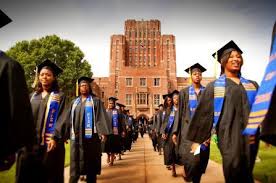
ARE HBCUs STILL RELEVANT? YES!
By Samori Swygert
A question that will recurrently buoy to the educational surface is, “Are HBCUs still relevant?” My response is an emphatic and resounding yes! Before delving into the matter of their relevance, it is imperative for all participants in the discussion to have a firm historical perspective on racial policies in America. Prior to Brown vs. Topeka board of education, prior to Bull Connor, prior to the Little Rock 9, prior to separate but equal, it used to be illegal for African Americans to learn to read, and a book was considered contraband to slaves.
I would like to consider other facts in establishing my case. Slavery was abolished in 1865. The top notch universities that are still revered as elite institutions of education were functioning well before 1865. Harvard University was established in 1636, Yale University was established in 1701, Princeton University was established in 1746, Columbia University was established in 1754, Brown University was established in 1764, and Cornell University was established the same year as slavery was abolished, 1865. You must gain an accurate temporal relationship with these dates in correlation with the timeframe of slavery. These dates indicate that young white students were privileged enough to gain an education while blacks were concurrently enslaved! White students were afforded the head start, and momentum to create and contribute to the society blacks were still seeking freedom and rights in. The irony of the existence between these two institutions continued for well over a century. While some young white adults were being educated in science, math, literature, politics, engineering, and the arts in a comfortable environment, black children and adults performed strenuous and laborious tasks under a harsh, violent, and unsolicited system. Learning was encouraged in these institutions of education, and learning was discouraged and denied in slavery, complete polar opposites.
When slavery was abolished and the reconstruction era started, it still was difficult for the newly freed slaves to thrive in this new society. Despite their new found freedom, admission into institutions of higher learning was still denied and the sheer cost alone was almost impossible. How were African Americans able to gain an education on a mass scale to compete with their white counterparts in society?
There are many stories and cases of blacks that matriculated into Ivy League schools overtime. However, there was no single institution that facilitated the mass education of African Americans until Historically Black Colleges and Universities (HBCUs). The movement to create institutions specifically geared toward the education of blacks across the country empowered the African American race, and propelled them forward. Once afforded this opportunity to learn, it fostered a change in their lifestyle because they gained the competence and confidence to compete, and take command over their own destiny. HBCUs gave blacks more independence. African Americans did not have to attend traditionally white institutions in order to gain a degree. The obstacles on their road to progress began dwindling. Time proved that blacks were just as educable, competitive, innovative, and intelligent as whites. The deprivation and denial of resources, time, land, and money was the only difference. A classic historical example made evident was the debate team legacy of Wiley College portrayed in the movie, The Great Debaters.
The Journey Continues
As we continue down the timeline we’ll see black law schools, medical schools, dental schools, nursing schools, pharmacy schools, and business schools emerge, and an exponential production of well trained black professionals. The HBCUs began a legacy of greatness that compounded with each year of existence. They established a rich heritage of inspirational stories of triumph, and success that each black student can relate and aspire to. They are the true stories and examples of “pulling yourself up by the boot strap”.
But why an HBCU?
The key attribute about HBCUs is that they tell students they can make it. Yes, HBCUs will take those high scholastic performing students, and they will also take that borderline student and hinge their bets on that borderline student’s potential. It’s said that many African American students may not be afforded the opportunity to an Ivy League college due to stringently high academic criteria, theorized institutional bias, or the exorbitantly high cost of education. Whatever the reasons may be that some black
students don’t attend Ivy League or traditionally white institutions, HBCUs provide a unique empowering and educational haven for black success. If a student may be average, borderline, or insecure, the HBCU provides a positive identity for that student and a sense of pride.
A question of identity
In American History classes, students will hear about the brilliance of Benjamin Franklin, Thomas Edison, Albert Einstein, John Kennedy and more. So white students have symbols of success they can identify with. That identity encourages them to do better, or replicate their historical models of success. However, the under-emphasis of black success in American History classes may leave young black students feeling hopeless and devoid of any historical pride, and thus have low expectation and standards of themselves.
At HBCUs student will be in classes with peers of the same color, some of similar stories that they can relate to and share true inspiration and motivation to get through their journey. The second component of identity that HBCUs provide is within the history. Students are taught in University 101 about how blacks like themselves were able to achieve success despite the social odds against them. The students can look at George Washington Carver and say “a black man did all this”. The student can read about the life of Charles Drew and his medical achievements and say “that was a black man”. They can look at Black Greek Letter Organizations and see the positive power in the unity of young blacks that are devoted to one common cause. Students can walk the halls and see the statues of great blacks, and say “I’m much greater than the stereotypes and statistics that the media portrays”. They are surrounded by professors that have a concept of the racial struggle for equality for blacks, and thus have a genuine vested interest in giving the best education they can to further the posterity of each generation of students.
You can’t plead the same exact case for Ivy League and Non-HBCU institutions of higher learning. HBCUs reaffirm the greatness in the potential of every black student if provided that opportunity, because it gives them multiple frames of reference. The student can always look at past and recent historical black diamonds that may have just been a piece of coal that needed careful positive pressure. Since their inception to contemporary times, HBCUs have their niche and their need!
I cringe at the thought of all the talented black youth that have potential, but are not afforded the opportunity for higher education, and are sometimes temporarily or permanently locked out of a better way of life. I also cringe at the thought of the deprivation of such a rich cultural heritage that gives them an identity of greatness, and unlocks all their potential unbeknownst to them. Ivy League and other Non-HBCU institutions are great and an education in general is wonderful, but it’s my opinion that HBCUs provide a more holistic, nurturing education that compliments the needs of the black student. So are HBCUs still relevant? My answer is an emphatic and resounding, YES!! A more serious question to consider is this, “what would have happened to the millions of HBCU graduates that were not admitted to Non-HBCUs if HBCUs didn’t exist?”

Were drugs another reason America entered Afghanistan?
By: Dr. Samori Swygert
I hate to be accusatory, but you must always ask questions to distill truth from situations. I was reviewing some old articles I read from the The Economist magazine (a very reputable geopolitical news source). July 14th, 2005, the Economist magazine published an article entitled; After Victory, defeat- Nature takes a malign hand.
This is the link: http://www.economist.com/node/4174642
The ulterior motive and “high” hopes
Afghanistan’s geographical landscape is home to one of the largest supplies of poppy from which opium is produced. The United States engaged the Taliban and Al Qaeda after the tragedy of 9/11. This led to a witch hunt for Osama Bin Laden across various regions of the Middle East. America ultimately landed in Afghanistan.
According to the article in the Economist, in one year alone in 2003, Afghanistan harvested 4,200 tonnes of opium. 1 Ton = 2000 pounds, and 1 kilo= 2.2 pounds. This translates into 3,817,800 KILOS of RAW opium in 2003 alone. The typical street value of a kilo averages ~$23,000 (give or take). $23,000 multiplied by 3,817,800 kilos = $87,809,400,000.00. Remember this is raw uncut, un-manipulated opium.
When I looked at that, I was forced to rethink a lot of things.
I remember reading an article in the New York Times about bags of “ghost money” being sent to Hamid Karzai of Afghanistan. That article can be found here: http://www.nytimes.com/2013/04/29/world/asia/cia-delivers-cash-to-afghan-leaders-office.html?pagewanted=all&_r=0
I then recalled how General Colin Powell ruined his credibility by selling misinformation to the UN as a pretext for war against Sadaam Hussein, and accused him of possessing “weapons of mass destruction”. The war against Sadaam never revealed any such weapons, but America had disposed of one of their long-term targeted enemies.
The war on terror is a masterpiece of military, political, and capitalistic strategy. There are legitimate concerns that should be addressed as far as national security and defense. However, I can only look at the data supplied and form my own thoughts. That is called independent thinking and connecting the dots.
I won’t go further into speculation because it’s irresponsible and reckless to make accusations you can’t substantiate and prove. However, I’d like to know your thoughts, and if it perked your curiosity as well.
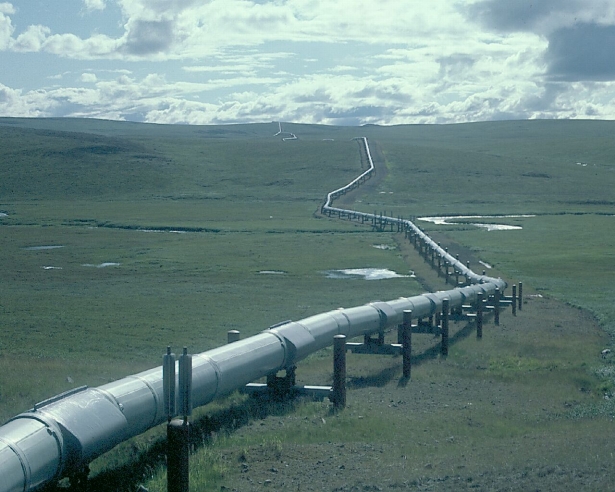
Keystone Pipeline deal may strike oil
by: Dr. Samori Swygert
According to an article published by the New York Times, the controversial approval of the Keystone Pipeline may be approaching soon.
Copy and paste this link for NEW YORK TIMES ARTICLE : www.nytimes.com/2014/02/01/us/politics/report-may-ease-way-to-approval-of-keystone-pipeline.html?_r=0
The pipeline would extend from Canada all the way to the Gulf Coast. The geographical dimensions would account for 1,700 miles of pipeline , and has a speculated output of 830,000 barrels of oil a day. One barrel of oil contains 42 gallons.
Weighing the benefits and risks
The major controversy is positioned between the environmental and economic impact. Many lobby and environmental groups raise legitimate concerns about the impact of global warming, Greenhouse gases, and carbon emission. The groups that show opposition to the possible approval are : NextGen Climate, The National Wildlife Federation, and Friends of the Earth. The Inspector General had conducted an investigation in which the State Department released an environmental impact report. The report appeared to lessen the extent or severity of environmental impact from construction of the Keystone Pipeline. The report also notes a potential 17% increase in Greenhouse gas emissions from the extraction.
However, the article in the New York Times pointed out that a member of the TransCanada company (the company that will participate in construction) helped draft the environmental report. This resulted in a high point of critique on conflict of interests.
President Barack Obama is on record for expressing concerns about the environmental impact. However, the report of reduced environmental havoc may influence the President to approve the construction.
This is a critical issue because the United States has consistently expressed future goals of establishing independence on foreign oil reserves. Moreover, this may foster a stronger bond between America and Canada as indicated in the article. Lastly, this is an opportunity for job creation, and everybody in America understands the severity of the unemployment rate. The article references creation of 3,900 jobs for constructing the pipeline. I’m sure other jobs will be created that are associated with it, such as; operations and maintenance.
The Alternative to the Keystone Pipeline
The alternative to this is the transport of Canadian oil sands via railway, but industry leaders are skeptical due to the risk of recent railway derailments and explosions. This alternative includes more risks. Citizens of the towns in or around the prospected tracts of construction have to juggle between jobs and the risk of health. We’ve seen what happened in West Virginia when a coal company haphazardly leaked thousands of gallons of a toxic coal cleaner into the city’s water, and put 300,000 people at risk. The leak also inconvenienced restaurants, and other local businesses.
Ultimately John Kerry has to evaluate all the data within the report and has to meet with various American agencies like the EPA, Department of Commerce and more.
I truly hope that the Executive Branch, and the corporate portion of the deal are operating at the highest standards of care and integrity. What we sacrifice for profit will only resurface as an expense later. Neglecting to responsibly account for the environment will reveal itself as new budget items, and present itself as a new national crisis. We also must expand our research into solar like China, and other renewable energy resources.
What are your thoughts??