Category Archives: Business & Financial News

section for data and information tailored around business, commerce and financial issues

Your quality of life is deteriorating on a Hamster Wheel

American’s live their lives on a hamster wheel!

By: Dr. Samori Swygert

Originally published on: http://financialjuneteenth.com/dr-samori-swygert-your-quality-of-life-is-deteriorating-on-the-hamster-wheel/

Are you a hamster?

We conveniently quantize the availability of time by asserting that there are 24 hours in a day.

Time can’t be recouped in respect to human life expectancy, which is finite. Personally, I don’t really believe in time. I think what we describe as time is just a continuum of existence, and we created time to gauge, measure, and chronicle our level of activity while alive. When we die, the world doesn’t die, it continues in perpetuity as we rest six feet below the ground. With that out of the way…

We can examine the rise in suicides, homicides, mass shootings, depression and other mental illnesses that have surged in record numbers. The quality of life has gone down for the average American. The idea of enjoying life and all its wonders has been substituted with a stressful and monotonous Hamster wheel of “swim or sink.”

American society has rapidly progressed, transformed, and matured. A true stratification of human life has emerged and become more pronounced. Earth is a finite mass with limited resources. Corporations, foundations, family lines, and government influence have pretty much claimed control, and the remaining resources and capital are being hoarded with speed.

The average American citizen finds it harder and harder to live a comfortable life.

Let’s analyze the metrics of a 24 hour day for some working parents:

  • Sleep– it’s recommended that you get at least 6-8 hours of sleep each day (meaning 18 or 16 hours are left of your day)
  • Commute– the average American spends at least 1 hour in round trip traffic commutes (meaning you have only 17 or 15 hours left of your day)
  • Work– most people will work an 8, 10, or 12 hour shift (meaning you have between 5 and 9 hours left in your day)
  • Health and fitness– research recommend at least 30 minutes to an hour a day of exercise (meaning you have about 4 to 8 hours left in your day)
  • Children– if you have babies or young children, you have to feed them, prepare bottles, wash and iron clothing, cook, bathe, change diapers, nurse them, maintain a clean house, or help with homework and check homework, take them to extracurricular activities (sports, music lessons, scouts, choir rehearsal, etc), that can easily take 4 hours in the blink of an eye ( so that may be some people’s 24 hours)

PAUSE…………..

When do you stop to factor in quality time for your mate, time to work on your own dreams, goals, hobbies, and personal projects?

When do you have “quality family time,” not just “maintenance family time”?

When do you sit and find some plain old “me time”?

When do you have time to enjoy your friends and other family members?

Now let’s compound all of this for a single parent. What type of stress does this conundrum create and exert on the single parent’s mind? This can be overwhelming, exhausting, and burdensome. However, this is the reality for the majority of Americans today.

This is nothing but a Hamster wheel; yet, simultaneously, it’s a Ferris wheel for the wealthy. The uber rich have accumulated so much wealth that their lifestyle isn’t constrained or confined to these social parameters.

The average American citizen works so the wealthy won’t have to work. Major deals, contracts, and agreements are conducted via wireless communication on a private jet while flying to their private island to have brunch. Laborious tasks aren’t even a thought because “the help” conduct those tasks and activities. Their quality of life is great. They can’t fathom the mental turmoil nor the taxing physiological toll of the American employee from their pinnacle or apex. The socially oppressive carnage below is almost a myth because they’re exempt from it.

A Ferris wheel

A Ferris wheel is an enjoyable entertainment apparatus. It allows the rider to experience life below and then raises them above for a sustained period of time to admire the expansive wonder, beauty, and splendor of the surrounding horizon. This is done effortlessly, it’s devoid of any exertion or expenditure of physical energy.

A Hamster wheel

A Hamster wheel is an apparatus constructed to entertain the owner of the hamster and keep the rodent’s time occupied while confined in a small space. The hamster expends and exerts energy in a routine cycle, but NEVER ascends to higher heights of enjoyment or change in spatial perspective. When you examine most hamster cages, they’re only comprised of food, water, floor material, and… that ominous wheel.

HOWEVER, if the hamster was smart, it would figure out how to break the sides of the wheel and stretch it into a ladder for freedom. How can we use the little free time we have within a 24 hour cycle to create our ladder to freedom?

Currently I’m a hamster breaking the sides of my wheel.

This article is intended to stimulate thought. What are your thoughts?

Hit me on Twitter @docswagg06

Dr. Samori Swygert: Black America Practices Group Economics Every Sunday, Where’s the ROI?

Black America Practices Group Economics Every Sunday, Where’s the ROI?

By: Dr. Samori Swygert

originally published at: http://financialjuneteenth.com/dr-samori-swygert-black-america-practices-group-economics-every-sunday-wheres-the-roi/

How many times have you spoken with friends, colleagues, or family about forming an investment club, starting a business, purchasing real estate, or some other financial endeavor to generate alternative sources of income?

Many times these dreams of group economics fail to launch because your potential business partners are fearful, lack desire, or lack the knowledge. Many times the dream won’t work because your partners don’t believe, are too self involved to participate, or consumed with jealousy because they’re not the originator of the idea.

I’m going to share the perfect real-life case study of how wealthy mainstream America moves to make financial gains and solidifies generational wealth.  The power of group economics and aggregated money speaks volumes.  Dr. Claude Anderson can’t say it enough.

WHAT AM I TALKING ABOUT?

Five young tech entrepreneurs had a dream of purchasing THEIR OWN MOUNTAIN.  This idea or dream sounds absurd to the common mind that accepts mediocrity and chooses to wallow in doubt and disbelief.

Powder Mountain is a vast 10,000 acre swath of land located one hour outside of Salt Lake City, Utah.  These entrepreneurs consolidated all their assets, and solicited the monetary help from 50 investors. One investor was the founder of Paypal and a consortium of other heavy-hitters that included sports stars. This conglomerate was able to purchase Powder Mountain for $40 Million dollars.

They want to construct approximately 500 home sites on the land.  The land will serve as a multipurpose venue where they’re converting a portion of it into a ski resort (500 inch average annual snow precipitation).  The other portions will be for domestic living, business retreats, and other private functions of their wishes (because they own it).

5 QUICK TAKEAWAY LESSONS

1.  Own your dream, and pursue it with vigor, fervor, and tenacity despite how insane it seems to the “common consciousness“.

2.  ONLY network with individuals that share your belief in the dream and are willing to commit their personal assets to help transform the dream into a reality.

3. Have a well thought-out plan that’s meticulously documented and explainable so potential investors can feel the tangibility of your dream.

4.  LAND IS KING, Earth is a finite mass, you can’t grow more Earth.  Once each inch of Earth is purchased or owned, the only way to acquire it is by trade, purchase, war, or bequeathing of property.

5.  Wealthy investors saw younger entrepreneurs trying to elevate their circumstances, and took a chance to give back by investing in the dreams of these young men.

GROUP ECONOMICS THAT WE IGNORE

We’ve seen the impact of group economics in several aspects of our life.  The mafia practiced group economics and they called it “THE COMMISSION“.  Although Hollywood glorified the lifestyle in cinematic theatrics, this was a real conglomeration of individuals that divided up sections of real estate and established supply chains and trade policies that would enrich all five mafia families for decades. Greed and power were their only downfalls.

Many of us practice group economics every Sunday morning.  Millions of parishioners fill the pews of sanctuaries of numerous religious denominations on Sunday morning.  The collection of tithes and offerings nationwide amount to hundreds of millions of dollars each week.  That is group economics.  You regularly and consistently make a financial contribution and participate in a common belief.  This money is used to finance all the associated expenses and projected goals of the church, such as: food and clothing drives, retreats, repairs, schools, nursing homes, etc.

Here’s an example of group economics that hits closer to home: Do you scroll through your Facebook timeline and see a myriad of your friends on vacation together?  Well, that’s group economics.  They’ve taken time to save money and plan out lodging, activities, travel, and other amenities that they all can enjoy together for that time.

WHAT AM I SAYING?

Ultimately, it’s time for us to evolve into a more serious realm of understanding money.  We can find ways to come together and spend money on temporary, short-term enjoyment like vacations, but they have no true monetary return on investment.  We can tithe, but realistically speaking, tithing won’t pay our property tax, mortgage, student loans, credit cards, car notes, child support, etc.

I think it’s fine to contribute to vacation plans and the faith of your choice, but we must set aside money and coalesce as a group to procure real assets that can generate revenue and leave something for our children and their children’s children.  The last takeaway message that I feel strongly about is the reaching back of wealthy African Americans to support the dreams of young African Americans to help transform dreams into true products, services, assets, and wealth.

THERE IS A DIFFERENCE WHEN YOU CAN LEAVE YOUR FAMILY WITH EITHER A MOUNTAIN OF DEBT, OR A AN ACTUAL MOUNTAIN!

What are your thoughts?  Hit me on Twitter @docswagg06

How the rich protect community wealth in, “THE HAMPTONS”

hampton

How the rich protect community wealth in, “THE HAMPTONS”

by: Dr. Samori Swygert

Lifestyles of the Rich and Famous was a nationally syndicated TV show that aired from the mid 1980’s to 1995.  Many remember the host Robin Leach, he spoke with a distinct accent as he showcased the enormity of opulence, and excess of wealthy individuals.

Nestled deep in the most posh, and private enclaves of high society, rests “The Hamptons of New York State”.  This locale is home to some of the wealthiest in New York, and America.  The caliber of residents in the Hamptons extend from some of the most ostentatious to the more reserved and humble, but the common denominator is wealth.  Jay-Z and Puffy even brag about splurging in the exclusive and decadent luxuries of the Hamptons.

However, there is more to this side of town than mansions, and costly estates.  It is important to understand the philosophies, strategies, and practices that the wealthy implement to protect their lifestyle.  I read an interesting article in this past Friday’s (8/1/14) New York Times.

The article detailed how the residents of East Hampton defend their economic territory from outside chain or “formula stores”.  They defined a formula store as a store that has at least 15 other stores nationwide, and have “the same merchandise and decor”.

The majority of the residents patronize community owned businesses.  They have a rapport and an economically intimate relationship with the community’s proprietors. The devotion to the community is goes beyond unspoken trust, and familiarity.

This wealthy community institutes economic policies that guarantees the recycling and filtering of money back into the community.

The strategies

The following strategies were discussed.  First, the East Hampton community sets forth town zoning code. This code stipulates that any outside business that wishes to buy/rent to establish operations within the town must first get a permit that encompasses detailed planning.  The company must submit to a complete “architectural review” from the town.  A public hearing must be conducted for all to judge and evaluate.  A traffic study must be conducted to see how conducive the business operations are to traffic flow and city transportation.  Lastly, a 2% preservation tax is applied to each and every real estate transaction.  According to the article, this has amassed a whopping $250 Million dollar coffer, for a town population of 21,000.

The author of the New York Times article, Joseph Berger, noted how they utilize the $250 million dollar preservation tax.  The $250 million dollar preservation coffer is “used to buy woodland, wetlands, farmland, and waterfront property; more than 40% of town land is protected”.  In essence, this solidifies and guarantees the sustainability of the town.

Dr. Claud Anderson

Many people are familiar with Dr. Claud Anderson, and he has a growing following each day.  This is exactly what he’s been telling African Americans to do since he wrote his first book, Black Labor White Wealth.  He’s given step by step application on how to practice and master group economics and community security.  He goes further in depth with his follow up book, Powernomics.

This article caught my eye as I read through the detailed strategies of how they manage their community economics.  When you permit chain stores, and outsiders into your community without any economic accountability to the community, your money may leave, and never comeback.  That is a siphon.

However, when the majority of businesses are operated by the residents, and resolutions are passed to procure a percentage of revenue from outside business, that’s recycling of dollars.

The author also gave an example of a 7-11 convenience store that tried to open in Montauk, a town over. Residents constructed a Facebook page devoted to a strict boycott of the 7-11, and the local Chamber of Commerce even “protested”.

The residents expressed an overwhelming sentiment to preserve the community identity and reflection of the culture.

I will attach the story below so you can read at your leisure and share.  This was really insightful and made me wonder, “why does Dr. Claud Anderson get so much push back from some segments of the African American community, when wealthy communities successfully institute the exact same practices to ensure their survival?”

This is how we are to protect the “supposed” $ 1.1 Trillion dollars that we’re purported to spend in the upcoming year.

http://www.nytimes.com/2014/08/01/nyregion/a-fight-to-shackle-the-chain-stores-in-east-hampton.html?_r=0


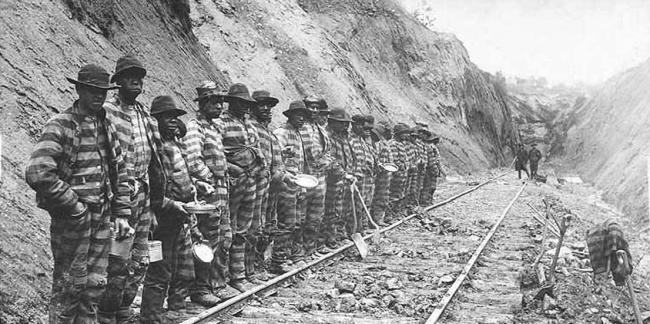
True story: prison labor increased Texas unemployment rate

chain gang

True story:  prison labor increased Texas unemployment rate

By: Dr. Samori Swygert

We often hear about “the prison industrial complex”. Some of us just shrug it off and try our best to avoid being arrested and incarcerated. We inform our children to avoid inappropriate and illegal behavior that would land them in prison.

However, this is only a fraction of what the prison industrial complex encompasses. In fact, you can be the most law abiding citizen and still be affected by this exploitative system.

I want to share a true case study that occurred in the mid 1990’s that I ran across last week. I and a few of my colleagues have been doing some research into this system and managed to excavate this diamond in the rough. Some of you may be familiar with the story if you’re from Texas.

In the mid 1990’s Leonard Hill was the owner of Lockhart Technologies of Austin, Texas. His company produced circuit boards and other system parts for computers and electronics. Enticed by the opportunity and potential to increase revenue, he turned to an alternative form of human resource. That alternative form of human resources was prison labor.

During the 1990’s another private prison group was on the scene. Wackenhut private prisons had established prison operations in Texas. Currently, the company went through new business transitions and is renamed “The Geo Group”. This group maintains prison facilities in North America, the UK, Africa, and Australia. They operate mental institutions, detention centers, immigration facilities, and prisons.

Now back to Leonard Hill and Lockhart Technologies of Austin, Texas.

Leonard made a deal with Wackenhut at the time to have his electronic components manufactured by prison inmates in the Wackenhut facilities for 1 and 2 dollar prison wages. This decision to relocate his operations to prison production relieved him of paying any and all benefits and obligations such as health care, holiday pay, and on the job injuries. He no longer worried about maternity leave, absenteeism, lateness, sick days, vacation, and all the other expenses that an employer has to factor into their payroll budget.

Consequently, when he compared and contrasted the risk benefit analysis in terms of dollars and cents, he fired his 150 employees, and multiplied his revenue stream exponentially.

Let’s do some math

If Leonard Hill was paying his employees $10.00 per hour with a typical 40 hour work week, that translates into $19,200 before taxes. Let’s multiply that by 150 employees. This yields a payroll expense of $2,880,000 annually. By shifting his operations to the private prison labor sector, Leonard Hill pockets almost all of his payroll expenses as income.

So what does this mean? You’ve heard it before, prison is big business. It’s not enough to be the perfect law abiding citizen to be affected by the prison industrial complex. Remember we’re in economic times where the greed and exploitation component of capitalism is in full effect. The exploitation of prison labor can destabilize the job market for law abiding citizens that play by the rules. You may operate within the legal realms of your daily activities, but that doesn’t guarantee that your “safe and comfortable” job will be there tomorrow. Your domestic affairs can be instantly dismantled if your company shares the same philosophy and ideology of Leonard Hill.

This underscores the importance of becoming financially astute even if you don’t have a business degree. This also pleads the case for entrepreneurship and community based business models. These type of endeavors are proactive, and preventive measures to reduce the instability of the job market. Remember employers don’t hire for morality, they hire for money. Can they use your energy, time, and talent to increase their profits at the cheapest pay rate possible?

You can find this story and others like it in the link below.

https://www.prisonlegalnews.org/news/2010/mar/15/the-prison-industries-enhancement-certification-program-why-everyone-should-be-concerned/

How NSA surveillance can compromise our financial security

How NSA surveillance can compromise our financial security

By: Dr. Samori Swygert

I think that the surge in government intrusion into our privacy poses a risk. Eric Snowden revealed the vast collection and archiving of our telephone, email, and internet data. Can unlimited access to our private plans compromise and undermine the American financial system, economic system, and rights to intellectual property (patents, trademarks, and research)?

My hypothesis is, humans are flawed and are easily corruptible when the appropriate stimulus is presented. As humans we are imperfect and live with vices, habits, hang-ups, and react in the most unpredictable manner when we’re desperate.

NSA versus Intellectual Property

The following is a hypothetical scenario to illustrate my point. Let’s say myself and 3 other colleagues have been designing a new invention that we wish to get patented. We may email each other the layout, designs, specifications, mechanisms, equations, measurements, and other details that go into making an invention. Our invention could revolutionize the automobile industry forever.

Let’s say an NSA employee scans our email because one of my colleagues has an Arabic name that flags their system protocol. While reviewing the email, the NSA employee realizes that he/she has stumbled upon a gold mine because he understands the potential of our invention. He/she then takes all of our information and either sells it to bankrolled car industry expert or to a friend that decides to beat us to the patent process.

We can’t say this isn’t possible when Eric Snowden was able to pull hundreds to thousands of highly classified documents for his agenda. I believe this is how mass surveillance can compromise the intellectual property of American citizens.

NSA versus the American Financial System

Allow me to pose another hypothetical scenario. The Securities and Exchange Commission (SEC), regulates the investing system. They protect the financial market from fraudulent activity, insider trading, promote a fair monetary system, and a myriad of other responsibilities. We’ve seen Martha Stewart serve time for insider trading of her shares of ImClone stock. We’ve seen what happened with Bernie Madoff, Enron, WorldCom, and more.

Imagine the amount of powerful information an NSA employee has at their disposal. What kind of financial power could be gained by accessing Warren Buffet’s email, phone calls, and internet activity.

The NSA employee could literally tip the hands of any and every corporation, private equity firm, hedge fund, and mogul. They would have private knowledge on future mergers, acquisitions, sell-offs, splits, and other big Wall Street /private sector deals.   This valuable information grants a secret advantage and privilege to an NSA employee. They can sell this knowledge to a select few, or use it to unfairly enrich themselves.

This is how I think mass surveillance can compromise the American Financial System.


NSA versus the American Political System

American history and civics classes always reinforced the dynamic of “checks and balances”. This purported mechanism was constructed to guarantee that no branch of the federal government overstepped their respected boundary.

However, the American political system has consistently evolved since its’ initial inception. We’ve arrived at a crossroad where money, Super-Pacs, soft money campaign contributions, television, radio, and social media steers our political system in an unprecedented manner.

We’ve seen how the IRS is now under the scrutiny and investigation for targeting Republican and Tea Party affiliated political figures. The IRS is accused of illegally going through their emails.

Do you remember the David Petraeus scandal, or New Jersey Governor Chris Christie’s bridge debacle? Their political integrity were and are placed on the line by emails and text messages. Imagine the political power that can be yielded if bank rolled special interest groups started throwing massive amounts of money at NSA employees to excavate private dirt on political opponents. What if they paid them to divulge political strategies, and campaign plans of political opponents, to intervene and prematurely counter attack other political candidates?

This is how I believe this era of mass surveillance and collection of data compromises the American political system, financial system, and possibilities of intellectual property.

We are vulnerable and susceptible to a hidden monkey wrench in our daily lives. We don’t know how our data is being used, manipulated, and exploited. We have no way to assess the character and integrity of the individuals that have unlimited access to our most intimate and private plans. The more technology and government become intricately interwoven in our lives, we evolve into victims of control. The person that doesn’t know, will always be the victim to the well informed.

I would advise you to watch the cable show: American Greed. This show profiles how some of the most sophisticated crimes have been orchestrated by individuals in power due to a perversion of their moral character.

Peace

Is “increasing minimum wage” just feel good rhetoric?

Is “increasing minimum wage” just feel good rhetoric?

By: Dr. Samori Swygert

For many workers across America, their hourly wage has remained stagnant, fixed, and inflexible. The only financial increase many have experienced is the cost of living.

This article will address the everyday cost of living and its’ incongruences with the hourly wage of the average American. The question to ask is, “Is an increase in hourly wage, too little too late or a last minute attempt to pacify the American populace?”

Household budgets remained strapped for cash.  Family members routinely trim expenditures, and choose between their wants, needs, and mandatories.  The inability to effectively prepare for retirement, emergencies, children’s education, afford a wedding, and even deciding to have children are all governed by our earning potential.

President Barack Obama rallied for an increase in the federal minimum wage with vigor, fervor, and tenacity in his State of the Union address a few months ago. President Obama’s aim was to increase the federal minimum wage to $10.00/hour. However, that is federal minimum wage, meaning for government employees. I agree with the President that the minimum wage should be increased.

My 2 questions for America is: “What about the non-federal employees across America?”, and “Is $10.00/hour enough to survive in America, realistically?”

Some states are adopting the approach that President Obama rallied for, and have begun to increase their state minimum wage. We’ve seen strikes, walkouts, and protests from fast food to Walmart employees breakout from state to state.

Let’s analyze this

Virtually every facet of our society has increased the price tag on the goods and service they provide to Americans.

FITNESS- Washington D.C. has moved to implement a Yoga tax. Yes, gyms will now have to pay a Yoga tax for fitness. The D.C. government feels this tax based revenue can help subsidize the expenses on the city’s budget.

MILK- The New York Post published a March 2014 article that details how the cost of a gallon of milk may increase to an extra $1.00 based on the projection of dairy industry experts.

MEAT, POULTRY, FISH- The Daily Mail quoted some statistics published by the Bureau of Labor Statistics in a June 2014 article. They assert that the cost of meat, poultry, and fish have increased 7.7% over the last year. Furthermore, they graphically displayed the increase in cost of meat, poultry, and fish based on the Consumer Price Index. Meat, poultry, and fish are at the highest point they have ever been since 1967 according to the Consumer Price Index.

CHILD CARE- In April 2014, The Pew Research Center published an article that analyzed the increasing trend of stay at home mothers over decades. The data reveals that more mothers are choosing to be stay at home moms due to the elevation in the cost of child care. The research also shows that from 1985 to 2011, the average weekly cost of child care increased by more than 70% when using inflation-adjusted dollars. All my friends and work colleagues with children attest that their weekly childcare is approximately $250 or more. This calculates to at least $12,000 per year in basic childcare. A $10.00/hour job calculates to $19,200 before taxes. Childcare alone will consume over half your income in a $10.00/hour job. This doesn’t factor in food, transportation, housing, utilities, clothing, emergencies, and SAVING!

Moving along……….

RENT- April 2014, The New York Times published an article that detailed how the average cost of rent has drastically increased nationally. The asserted premise recommends that rent and utilities should not exceed 30% of your household income. They provide detailed data from 2000 – 2013. The average percentage of rent and utility expenditures in 2000 hovered around 25%. 2013 the average percentage of rent and utility expenditures has risen to almost 40%.

ENERGY BILLS- I won’t go too far in detail about the increase in energy bills for households for the sake of brevity in the article. I’ll furnish the links for you to review at your leisure. However, from Chicago, to Baltimore, to New Orleans, to California, the utility bills are increasing dramatically. Chicago’s electricity bills are projected to increase by 18%, Baltimore Gas and Electric Company will add an additional $15.00 to customer’s monthly bill in the upcoming months. The New Orleans energy company, Entergy, has reached an agreement with Algiers, New Orleans to increase energy rates by 31% over a 4 year period.

TRANSPORTATION- Transportation costs have risen and are increasing nationally. The supplied links will illustrate how fares have increased for subways, tolls, bridges, tunnels, buses, and ferry.

COLLEGE TUITION- We can’t forget how the cost of tuition has skyrocketed to unimaginable and almost unattainable proportions (please read the NPR article that is attached).

GASOLINE- We can’t forget the cost of gasoline, and the implementation of the gas tax (please see the Washington Post article).

HEALTHCARE- Yes, we have Obamacare in play but not all states are implementing it. Secondly, just because you may now get healthcare, it doesn’t stop the increase on healthcare deductibles and copays that many insurance companies are hiking up. (Please see the USA Today article)

So in conclusion

The increase in minimum wage to $10.00 isn’t enough. This increase doesn’t match the cost of living in today’s society. The sad part is that the outcry from millions of workers across the nation is loud. However, corporations assert that they won’t have enough to run their business, and will be forced to lay off workers if they increase minimum wages. This is a bunch of nonsense because these same corporations give multimillion dollar year-end bonuses to their top cabinet members each consecutive year.  This is supported by McDonald’s deciding to give their new CEO a $13.8 million dollar package from his $4.1 million dollar package in 2011.

Let’s not forget about the raiding and dismantling of employees pension funds.

The promise to raise minimum wage by 2 or 3 dollars is a pacifying move, something to placate the American demographic into silence. However, we don’t need a conciliation prize, we need gainful employment, and in the same breath, we as citizens need to focus on entrepreneurship and group economics to uplift ourselves.

The articles I furnished are proof positive that corporate America doesn’t care about the proletariat that propels them into wealth.


  1. http://nypost.com/2014/03/17/milk-prices-could-rise-by-1-per-gallon-experts/
  2. http://www.nytimes.com/2014/04/15/business/more-renters-find-30-affordability-ratio-unattainable.html?_r=0
  3. http://www.washingtonpost.com/blogs/in-the-loop/wp/2014/07/03/foxx-hedges-on-gas-tax-increase/
  4. http://online.wsj.com/articles/washington-plan-to-tax-yoga-leads-to-political-posturing-1403577281
  5. http://www.usatoday.com/story/money/business/2014/03/30/health-care-spending/7007987/
  6. http://www.npr.org/2014/03/18/290868013/how-the-cost-of-college-went-from-affordable-to-sky-high
  7. http://www.thenewstribune.com/2014/06/27/3265117/tacoma-narrows-bridge-traffic.html
  8. http://newyork.cbslocal.com/2013/11/30/toll-hike-coming-to-port-authority-bridges-and-tunnels/
  9. http://www.washingtonian.com/blogs/capitalcomment/local-news/its-now-a-little-more-expensive-to-use-metro.php
  10. http://www.ktvu.com/news/news/local/golden-gate-transit-increases-bus-and-ferry-fares/ngXNG/
  11. http://blogs.rollcall.com/the-container/transit-fares-going-up-in-several-systems/?dcz=
  12. http://www.dailymail.co.uk/news/article-2660709/Price-meat-fish-eggs-time-high.html
  13. http://www.pewresearch.org/fact-tank/2014/04/08/rising-cost-of-child-care-may-help-explain-increase-in-stay-at-home-moms/
  14. http://www.chicagobusiness.com/article/20140309/NEWS11/140309785/chicago-electric-bills-to-rise-up-to-18-in-june-under-new-integrys-deal#
  15. http://www.bizjournals.com/baltimore/news/2014/07/03/bge-requests-an-increase-of-185m-for-gas-and.html
  16. http://neworleanscitybusiness.com/blog/2014/06/26/algiers-electric-bills-to-rise-over-4-years/
  17. http://www.usatoday.com/story/money/business/2013/04/12/mcdonalds-former-new-ceo-big-pay-bumps/2078001/

Corporate America’s “do more with less” is killing us

Death and product recalls tied to job layoffs

by Dr. Samori Swygert

The O’Jays made a song entitled “For the Love of Money.” Now, the chickens are coming home to roost.

I started thinking about the unemployment rate and the associated correlations. There is nothing wrong with creating revenue, but corporate greed always produces human carnage. Have you paid much attention to the increase in recalls of automobiles, drugs, and food? Have you really examined the root cause analysis of the VA Hospital debacle? What about the recalls of cribs, car seats, and strollers?

It’s strictly my opinion that America has become obsessed with the philosophy of, “do more with less.” I think this corporate economic ideology is responsible for increased layoffs, downsizing, and the shipping of jobs overseas. Ultimately, this approach results in tragedies and greater expense.

However, if we continue conducting in-depth analysis, we’ll see there’s a correlation between many of these recalls and the cutting of jobs, and cutting of corners. Check out the examples below:

General Motor Recalls and Layoffs

I read a June 7, 2013 article in Bloomberg Business that explained how GM was going to lay off 430 factory workers (in Michigan) so the company can “retool.” The article said that 430 workers will be furloughed in phases, and they have no obligation to keep temporary workers. GM was reported to be building a new plant in which the workers would return to work. I don’t have an update on the employees that returned. However, we now see that GM has come under intense unprecedented corporate scrutiny and chastisement for faulty ignition switches which have been implicated in 13 deaths and 54 accidents. Globally, GM had to recall approximately 15 million vehicles.

Ford Motor Recalls and Layoffs

Ford Motor Company had to recall 1.3 million vehicles due to power steering defects at the end of May 2014. According to USA Today, “The biggest recall was of 915,216 Ford Escapes and its corporate sibling, the since-discontinued Mercury Mariner, from the 2008 to 2011 model years over the steering issue. All of the compact SUVs were made at Ford’s Kansas City Plant and 736,407 are believed to be in the U.S., with most of the rest in Canada and Mexico”. Ford also recalled 195,527 vehicles produced from its Chicago plant from 2011-2013.

I researched this a little bit and the Kansas City Business Journal reported that Ford laid off 150 workers from its Kansas City Plant. A 2008 article from The Chicago Tribune reported that Ford was going to cut over 2,000 salaried employees. The following are direct excerpts from the article, “There’s a full-court press on to get things done as quickly as possible,” said David Cole, chairman of the Center for Automotive Research in Ann Arbor, Michigan. “The pressure is on to get the turnaround under way before the money runs out. They’ve got to conserve cash as best they can. Ford has 23,700 salaried workers at the end of 2007. The automaker has cut the number of full-time salaried workers in North America by 10,800 since the end of 2005.” 

Graco Car Seat Recall and Layoffs

You start to see a direct correlation when you compare the time frames of the layoffs to recalls. I think this also is prevalent with the baby car seats. Let’s take a look at Graco. Graco is a Minnesota-based company that manufactures baby car seats and other retail items. According to a December 2008 Star Tribune article, Graco cut up to 240 jobs, and the company projected that the cut would save them $9 million per year. Fast forward to 2014, Consumer Reports published an article detailing the recall of 3.7 million car seats due to buckle issues. The time frame for the recall included various models from 2009 to 2013. Hmmm… Coincidental???

We open Pandora’s box of trouble when we look at the American human labor force as dispensable. Yes, many companies took a hard hit from the 2008 economic crisis and had to make decisions. However, it’s imperative that companies conduct true risk-benefit analysis and not just cost-benefit analysis. The cycle of layoffs, furloughs, and downsizing can carry risky ramifications that may cost more than the money you project to save through layoffs. This over conservative practice eventually compromises quality assurance, product integrity, inspection, oversight, and safety.

Saving a few million dollars doesn’t compare to the loss of money from a tarnished brand, class action lawsuits (from death or injury), litigation, forced inspections, and upgrades from government and industrial agencies.

I think this illustrates how the greed of capitalism destroys families via unemployment and physical harm. This illustrates how greed returns to ruin you.  Furthermore, this illuminates the necessity, and integral role that human labor plays in public safety.

Can I definitively conclude that layoffs cause death and product recalls? No, but based on the preponderance of evidence which I’ve supplied, there is a strong correlation.  What are your thoughts?  You decide….

“Money can drive some people out their mind”- The O’Jays

http://youtu.be/kjuRhETwbI0


The Koch Brothers Own 2M Acres of Land, Slated to Make $100 Billion

The Koch Brothers: 2 million acres and $100 Billion Dollars

by: Dr. Samori Swygert

I had a chance to read an article in theHuffington Post this week, and it really blew me away.  Many of us are aware of the debate over the Keystone Pipeline.  The oil industry, corporate America, and other entities are drooling over the possibility and projections of the construction of the Keystone Pipeline.

The pipeline would start at the Tar Sands of Alberta, Canada and stretch down the middle of America and into the gulf for refinement.  The Huffington Post based their article on a report from the International Forum of Globalization.  

The report and the Huffington Post said that the Koch Brothers have the potential to make $100 Billion dollars if the Keystone Pipeline gets approved.  How will they achieve this?  First, the Tar Sands in which the unrefined oil source resides are located in Alberta, Canada.  Secondly, the Koch Brothers own a WHOPPING 2 MILLION ACRES of land in Alberta, Canada.  Thirdly, Koch Industries will facilitate a substantial amount of the construction, oil development, and collect money from oil derivatives.

This is major.  Their money is very long, strong and so is their lobbying power.  Furthermore, the report noted that they’ve already spent $50 million dollars to think-tank groups to help promote the approval of the deal.

I’m speculating that this will go through because of the amount of money involved and all the potential investors that will benefit and gain from its approval.  There is a big lesson to be learned here:  It is very important that we (African-Americans) pool our money and buy more land.  Earth doesn’t grow land, its dimensions are finite and exact.  Once all the land is owned, that’s it!

Instead of spending so much on clothes, jewelry, cars, lavish restaurants and vacations, we could redirect our finances to much more worthy causes of the future.  The Koch brothers have exploratory agencies that survey, sample, and inspect various land for what resources will be crucial, and then capitalize on that.  I don’t see why we can’t.

What are your thoughts on this?

You can also follow this article at: http://www.yourblackworld.net/2014/03/black-news/the-koch-brothers-own-2m-acres-of-land-slated-to-make-100-billion/

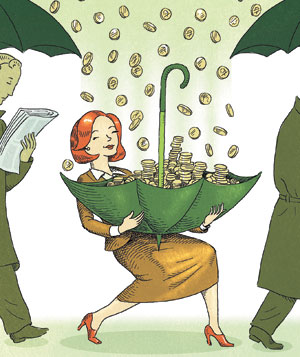
You know you can buy the weather

rain maker

You know you can buy the weather$$

By: Doc Swagg

We’ve been bombarded with a barrage of weird weather over the last few years.  We’ve been trying to adapt to the extremes in weather that proliferate both in and out of season.  We’ve also become acquainted with vocabulary that’s unfamiliar to our weather lexicon like:  Derecho, Polar Vortex, and Arctic Blasts.   We’ve witnessed the devastation of Hurricane Katrina and Sandy. We’ve also seen mudslides, droughts and uncontrollable wildfires.

What if I told you that you can make money off weather in a multi-billion dollar industry?  Would you invest?  Would you do further research into this?  Would you change your handling of money, knowing that even weather is for sale, and you are only a customer?

Let’s make it rain

Well truthfully people have been making money off the weather since early 2000.  There are what’s called Weather Futures.  The same way Wall Street conducts commodity trading of stocks, bonds, exchange traded funds and other financial capital, there is another entity called The Chicago Mercantile Exchange.  This is where weather futures transactions occur. Simply put, futures is a contract that allows a purchaser to speculate or bid on the future projected price of a supply or resource, and lock in that price when that time arrives.  This is good if you speculate properly.

This is the Chicago Mercantile Exchange link: http://www.cmegroup.com/

Let’s illustrate this for a better understanding.  Suppose the current price for a pound of sugar is $2.00, as a competitor in the candy industry, I see the demand for sugar increasing.  I can sign a futures contract to lock in a cost of $3.00 per pound in 2017.  2017 arrives and the demand for sugar is high like I predicted but the price of sugar in 2017 is actually $5.00 per pound.  Well I’ve just saved a lot of money by locking in a purchase price of $3.00 per pound where as my competitors pay market price of $5.00.  The down side is if I guess wrong and the future price drops, I’m then locked in a contract to pay $3.00 per pound and the 2017 price could be $1.50 per pound, so I’ve lost money.

Many weather futures bid on inches of rain fall, changes in temperature, snowfall and other variations of climate fluctuations.  This has tremendous financial implications.  Let’s extrapolate this knowledge into the American marketplace.  When it’s cold like we’ve been experiencing lately, we increase demand for heat, and thus it’s a boom in revenue for the oil industry.  When it’s extremely hot, we want air conditioning, and that is a big boom in revenue for utility companies.  How does this impact the farming and agriculture industry?

Farmers must strategically plan and protect their crop production and harvesting capabilities.  They must estimate rainfall, quantity of seeds, soil saturation, and more.  If I can follow the trend of global warming, then it may be wise for me to lock in seed prices based on predicted increases in temperature.

There are weather derivatives just like stock derivatives.  There are hurricane futures.  The weather futures market was estimated to be a $19 billion dollar market back in 2010.  The value has probably increased since then.


Striking 14 Carat “Cold”

All financial markets have forces that try to manipulate it for their financial gain.  You are probably wondering how this happens with weather.  Google the term “geoengineering”.  There are agencies that have been conducting atmospheric climate manipulation and modification.  This began with the experiments of Nikola Tesla (1856-1943) who created artificial lightening.

There was a bill that was submitted to congress called, THE WEATHER MODIFICATION RESEARCH AND TECHNOLOGY TRANSFER AUTHORIZATION ACT OF 2005, but the bill died.  The bill clearly explains the research used to artificially modify the weather, and the Department of Commerce was one of the agencies included in the bill.  Why would the Department of Commerce be included in this bill?  You have struck gold if you have the scientific and technological community able to modify the weather, and you have the capital to hedge on your future projections.

The proposed bill: https://www.govtrack.us/congress/bills/109/hr2995/text

Anyway, now you know if you didn’t already, that windfall profits (no pun intended) can be made by investing in weather.  Does this market encourage more geoengineering to increase profiteering in weather futures for individuals wealthy enough to participate in this form of hedging?

Some links below will fill in the blanks if you’re curious, and I’ve also included a video on weather derivatives from Bloomberg Business News.

http://business.time.com/2012/01/24/no-snow-no-problem-how-wall-street-profits-from-weird-weather/

http://edition.cnn.com/2009/LIVING/wayoflife/09/14/mf.get.rich.off.weather/

What are your thoughts on this?

http://www.youtube.com/watch?v=TuwuWPxUF-Q&sns=em


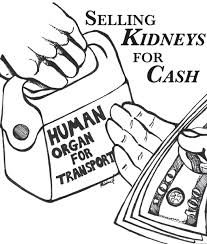
$$Wall Street speculates on kidney transplant market

kidneys transplantWall Street speculates on kidney transplant market

By: Dr. Samori Swygert

When people hear about selling your body, their psyche will typically project the image of prostitution or human trafficking.  However, the demand for human organs is at a premium, and the healthcare industry is poised to play as an active participant.

I had the opportunity to read a brilliant article by Gary Becker, and Julio Elias from the Wall Street Journal.  They elucidated the market demand, the associated reasons, and the parameters that will govern the economics of organ transplantation.

What are the facts?

According to Becker and Elias, the average waiting period for a kidney transplant is approximately 4.5 years.  The population of the kidney waiting list has basically doubled over 10 years from, 54,000 to 95,000 in 2012.  The list is inclusive of both genders, and all age brackets.  Individuals that have yet to receive a kidney remain on dialysis (a mechanized filtration system of the blood).  The average length of survival of a middle aged person on dialysis is approximately 8 years.  However, if blessed and afforded to receive a kidney transplant, their life expectancy gains another 24 years.  The authors of the article sadly reported that nearly 4,500 people died waiting for a kidney transplant in 2012.

“Time is money”

The sheer inconvenience of having to routinely schedule your whole life around numerous dialysis sessions can be overwhelming emotionally and mentally.  That in itself is an expense, the cost of peace of mind.  Well peace of mind is definitely disturbed with the actual monetary pricing of dialysis and kidney transplants.  Dialysis is a big ticket item on household budgets, because they average $80,000 per year.  You must then consider the 4.5 year wait time for receiving one.  That equation generates a figured expense of ~$ 350,000 from the cost of waiting alone.  The actual kidney transplant costs approximately $150,000, and you must still factor in the pharmaceutical expense for taking anti-rejection drugs for the kidney.

Maneuvering the market

To combat the wait time, save money, and save lives, many people and institutions are engaging in KIDNEY EXCHANGES.  This process facilitates and expedites the kidney donor/recipient matching process.  The problem is just finding a kidney, you must find a kidney that’s compatible with the blood type and tissue match of both recipient and donor, or the recipient’s body will reject it.

To meet the market demand for kidneys, proposals are being floated around for paying people for their kidneys.  Humans can live with one functional kidney, however many express reservations of parting with their organs.  The trepidation revolves around many reasons such as: fear of the risks associated with surgery, fear of lifestyle change, and time away from work.  To account for the fear, the authors propose a 3 month mandatory waiting period to allow donors to really think things through.

The price tag reported in the article ranges from a low of $5000 to a high of $15,000 per kidney.  The United States is not the only country considering this type of monetary-medical policy.  In fact, America is looking at its’ very own enemy, Iran, as a model.  Iran pays $4000 per kidney, and boasts a drastic reduction to virtual obsolescence of waiting times.

This costs an arm and a leg…or Kidney

The noted concerns in this new proposal is that this would construct a morally inhumane soliciting of the poor and disenfranchised.  The same way many individuals in financial binds will pawn items, or take out payday title loans, many people may turn to kidney donation as a financial solution.  Rather than donating a kidney to be physiologically philanthropic, individuals may resort to this. Economic climates like today, where unemployment is rampant, may provide an alternative means of revenue that wasn’t previously available.  The ultimate conclusion can be immense regret, especially considering that economics is a temporary and ever changing dynamic.  Kidney donation is very absolute and finite as opposed to sperm and egg donation where several reproductive cells are left.

Bottom line

In capitalism, everything is for sale, everything has a price, and everything can be negotiated.  Based on the capitalistic genetic makeup of America, I believe this will happen.  People must establish their own moral codes, altruistic/humanitarian philosophies, and system of priorities.  Organ donation is very noble, but I think you should do it for the right reasons.   Determine your reasons, be confident and comfortable with your choice.

Individuals should also note that the biotech industry is also developing body organs that are just like your internal organs.  This also brings the importance of good diet, health, and exercise.  These lifestyle modifications can cut down on the development of numerous conditions like kidney disease, heart conditions, and etc.

This seems like something that should be debated in Obamacare.  I can easily say that I received $15,000 for donating a kidney, but every year a person lives from my kidney should be tax deductible as per donating to life and reducing the strain on the United States Healthcare budget!  There are a lot of incentives and scenarios that should be reviewed if this system of pay for organs is approved.  We also must consider the loss in revenue from the medical device industry when the demand for dialysis drops.

Lastly, there would also have to be some regulatory commission to investigate if people were coerced into donations by Black Market Organ Harvesting operations, and the origin of kidneys to be sold in the market.  Also, why did the kidney waiting list double in 10 years?

Even Facebook sees opportunity

Facebook CEO Mark Zuckerberg has even thrown his hat in the ring to facilitate transplants using his database network.    http://abcnews.go.com/Health/abc-news-exclusive-facebook-tool-helps-organ-donors/story?id=16244991


Check out the source links and tell me your thoughts.

Sources

  1. http://online.wsj.com/news/articles/SB10001424052702304149404579322560004817176
  2. http://www.nytimes.com/2009/07/24/nyregion/24jersey.html?pagewanted=all&_r=0