Tag Archives: economics

You know you can buy the weather

rain maker

You know you can buy the weather$$

By: Doc Swagg

We’ve been bombarded with a barrage of weird weather over the last few years.  We’ve been trying to adapt to the extremes in weather that proliferate both in and out of season.  We’ve also become acquainted with vocabulary that’s unfamiliar to our weather lexicon like:  Derecho, Polar Vortex, and Arctic Blasts.   We’ve witnessed the devastation of Hurricane Katrina and Sandy. We’ve also seen mudslides, droughts and uncontrollable wildfires.

What if I told you that you can make money off weather in a multi-billion dollar industry?  Would you invest?  Would you do further research into this?  Would you change your handling of money, knowing that even weather is for sale, and you are only a customer?

Let’s make it rain

Well truthfully people have been making money off the weather since early 2000.  There are what’s called Weather Futures.  The same way Wall Street conducts commodity trading of stocks, bonds, exchange traded funds and other financial capital, there is another entity called The Chicago Mercantile Exchange.  This is where weather futures transactions occur. Simply put, futures is a contract that allows a purchaser to speculate or bid on the future projected price of a supply or resource, and lock in that price when that time arrives.  This is good if you speculate properly.

This is the Chicago Mercantile Exchange link: http://www.cmegroup.com/

Let’s illustrate this for a better understanding.  Suppose the current price for a pound of sugar is $2.00, as a competitor in the candy industry, I see the demand for sugar increasing.  I can sign a futures contract to lock in a cost of $3.00 per pound in 2017.  2017 arrives and the demand for sugar is high like I predicted but the price of sugar in 2017 is actually $5.00 per pound.  Well I’ve just saved a lot of money by locking in a purchase price of $3.00 per pound where as my competitors pay market price of $5.00.  The down side is if I guess wrong and the future price drops, I’m then locked in a contract to pay $3.00 per pound and the 2017 price could be $1.50 per pound, so I’ve lost money.

Many weather futures bid on inches of rain fall, changes in temperature, snowfall and other variations of climate fluctuations.  This has tremendous financial implications.  Let’s extrapolate this knowledge into the American marketplace.  When it’s cold like we’ve been experiencing lately, we increase demand for heat, and thus it’s a boom in revenue for the oil industry.  When it’s extremely hot, we want air conditioning, and that is a big boom in revenue for utility companies.  How does this impact the farming and agriculture industry?

Farmers must strategically plan and protect their crop production and harvesting capabilities.  They must estimate rainfall, quantity of seeds, soil saturation, and more.  If I can follow the trend of global warming, then it may be wise for me to lock in seed prices based on predicted increases in temperature.

There are weather derivatives just like stock derivatives.  There are hurricane futures.  The weather futures market was estimated to be a $19 billion dollar market back in 2010.  The value has probably increased since then.


Striking 14 Carat “Cold”

All financial markets have forces that try to manipulate it for their financial gain.  You are probably wondering how this happens with weather.  Google the term “geoengineering”.  There are agencies that have been conducting atmospheric climate manipulation and modification.  This began with the experiments of Nikola Tesla (1856-1943) who created artificial lightening.

There was a bill that was submitted to congress called, THE WEATHER MODIFICATION RESEARCH AND TECHNOLOGY TRANSFER AUTHORIZATION ACT OF 2005, but the bill died.  The bill clearly explains the research used to artificially modify the weather, and the Department of Commerce was one of the agencies included in the bill.  Why would the Department of Commerce be included in this bill?  You have struck gold if you have the scientific and technological community able to modify the weather, and you have the capital to hedge on your future projections.

The proposed bill: https://www.govtrack.us/congress/bills/109/hr2995/text

Anyway, now you know if you didn’t already, that windfall profits (no pun intended) can be made by investing in weather.  Does this market encourage more geoengineering to increase profiteering in weather futures for individuals wealthy enough to participate in this form of hedging?

Some links below will fill in the blanks if you’re curious, and I’ve also included a video on weather derivatives from Bloomberg Business News.

http://business.time.com/2012/01/24/no-snow-no-problem-how-wall-street-profits-from-weird-weather/

http://edition.cnn.com/2009/LIVING/wayoflife/09/14/mf.get.rich.off.weather/

What are your thoughts on this?

http://www.youtube.com/watch?v=TuwuWPxUF-Q&sns=em


African resources in the crosshairs of global capitalism

african oil

African resources in the crosshairs of global capitalism

By: Dr. Samori Swygert

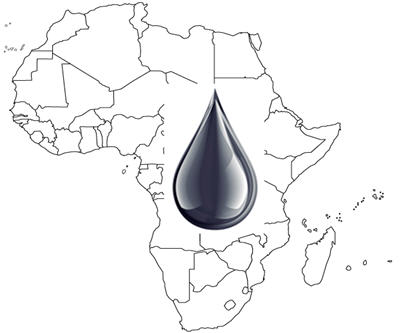
This month’s edition of Worth Magazine, a financial magazine, highlighted potential investments for 2014.  I reviewed some of the hotspots and focal points of investment.  The magazine highlighted Kenya and Mozambique as potential investment targets because of their untapped oil reserves.

I then researched the U.S. Department of the Interior, and the United States Geological Survey to correlate the magazine’s prospects with the data collected by America.  The wealth and resources of Africa are still abundant despite its’ history of plunder and pillaging.

Understanding the math

Before going any further, it’s important to understand the quantitative measurements that the data is reported in.

1 cubic foot= 28.3 liters

1 cubic foot= 7.6 gallons

1 barrel of oil= 42 gallons

1 barrel of oil= 5.6 cubic feet


These are important so that you have a relatable picture of the amount of volume in the reports that I’ve attached and sharing with you.

The technology

The U.S. uses high resolution satellite imagery, terrain analysis, and digital elevation models that allows them to calibrate the quantity of volume diamonds, and oil to be drilled or excavated.  Technically we can see what resources Africa has without actually being in Africa.  Think of it like a sonogram.  With a sonogram, you can see the image of the baby without having to actually enter the womb of the mother, you simply slather a little “jelly on the belly”, scan and view.


Diamonds are forever

A November 2012 fact sheet published by the United States Geological Survey reported that in Se’gue’la, Africa, there was a total of 10,100,100 carats of diamond deposits that have yet to be excavated.  Tortiya, Africa has a diamond reserve deposit of 1,100,000 that has yet to be excavated.  These two sections of Africa are located along the Ivory Coast.  The engineering, aerospace, luxury, and healthcare industries have many uses for diamonds, and I have no current updates of the amount of diamonds after this 2012 report.

The above info can be found here:  http://pubs.usgs.gov/fs/2012/3130/pdf/fs2012-3130.pdf


Slicker than oil

It is only logical that the U.S. engages in oil prospects as our demand for oil increases, and we try to become independent of OPEC for national operations.  This is why the Keystone Pipeline is the Big Steak on America’s dinner table.  African oil reserves are abundant and plentiful.  You may be wondering how plentiful right?


4 West African Provinces were analyzed and the results are jaw dropping.  America assessed the surrounding areas of Senegal, the Gulf of Guinea, the Niger Delta, the West-Central Coastal areas.  The survey estimates 71.7 billion barrels of oil, 187.2 trillion cubic feet of natural gas, and 10.9 billion barrels of natural gas liquids.  These were untapped and unexplored.  http://pubs.usgs.gov/fs/2010/3006/pdf/FS10-3006.pdf

Libya and Tunisia were analyzed in a 2010 geological survey.  The report furnished the following results:  3.97 billion barrels of undiscovered oil, 38.5 trillion cubic feet of undiscovered natural gas, and 1.47 billion barrels of undiscovered natural gas liquids.

 http://pubs.usgs.gov/fs/2011/3105/pdf/FS11-3105.pdf

 4 East African Provinces were analyzed.  The following areas were assessed: the Tanzania Coastal, the Seychelles, the Morondava, and the Mozambique coastal region.  The following results were reported by the United States Geological Survey: 27.6 billion barrels of oil, 441.1 trillion cubic feet of natural gas, and 13.77 billion barrels of natural gas liquids. 

http://pubs.usgs.gov/fs/2012/3039/contents/FS12-3039.pdf

 8 North African Provinces were analyzed.  The following areas were assessed: the Nile Delta Basin, Sirte Basin, Pelagian Basin, Trias/Ghadames Basin, Hamra Basin, Illizi Basin, Grand Erg/Ahnet Basin, and Essaouira Basin.  The following results were reported by the Geological Survey:  19 billion barrels of technically recoverable undiscovered conventional oil, and  370 trillion cubic feet of undiscovered conventional natural gas resources.

http://pubs.usgs.gov/fs/2012/3147/FS12-3147.pdf


It’s imperative that African nations are aware of the resources they possess.  The data retrieved by the survey didn’t involve invasive or diplomatically approved exploration, because this was conducted by satellite imagery and other methodologies.  Major technological advances and resources should be developed and made available to these African nations to extract these valuable resources in a safe and efficient manner.  The leaders of these nations must be very astute in their negotiations when granting exploratory and mining licenses to avoid exploitation which has been a repetitive, redundant, and recurrent theme in Africa’s history.  This is a tremendous bargaining chip for many of these nations.


This is also important considering the “mentioned” sanctions by the Obama administration of many African nations.  Food, medical and other aide is being held ransom-like by the U.S. for some African nations for failure to adopt or endorse homosexuality into their countries philosophy.   Also, are there potential business opportunities between African Americans and fellow Africans in the Motherland?

Click here so see that:

  1. http://www.forbes.com/sites/mfonobongnsehe/2011/12/09/obama-fights-nigerian-anti-gay-bill-threatens-to-cut-off-aid/
  2. http://www.bbc.co.uk/news/world-africa-23078655
  3. http://www.theguardian.com/world/2011/dec/07/gay-rights-us-aid-criteria
  4. http://www.washingtontimes.com/news/2013/jun/27/obamas-call-tolerance-gays-gets-cold-shoulder-afri/?page=all


What are your thoughts on the wealth of Africa’s resources and its’ global potential?

How Corporate Christmas Celebrations are Hypocritical


By : Samori Swygert

scroogeCorporate America could stand to sit down and watch, “A Christmas Carol” by Charles Dickens.  During this festive holiday, many Christians celebrate the birth of Jesus, embrace the blessings of family, and exchange gifts to show consideration of the wants and needs of family and friends.

Corporate America really milks and exploits this holiday season, as it proves to be the most lucrative in profit generation.  Christmas themed music, decorations and motifs festoon galleries, atriums, hallways, and main entrances of buildings.  Reindeers, stockings, cotton snow, Nutcracker arrangements, and shopping mall Santas pose with the children of mall patrons.  All of the aforementioned accoutrements compliment a tradition, but many companies use them strictly as bait.

Many associate Christmas with the warmth of charity, good-will, love, and care.  Well as much as this sounds spiritually enticing, there is a contradictory angle here.

Who is Ebenezer Scrooge

Those who are familiar with the movie, A Christmas Carol, remember how the main character, Ebenezer Scrooge was so obsessed with money that he had no regard for the spirit of humanity.  He overworked and underpaid his employees.  He penny-pinched to the point of insanity.  His employee had a son, Tiny Tim that was forecasted to die from health ailments unless Scrooge relented his extra miser-like practices. Three spirits visited scrooge and revealed how his stingy, inhumane financial disregard for humanity resulted in the terrible demise of all he conducted business with.  Does this sound familiar to you?? Hmmmm……

HUMBUG!!!

Although Walmart may have Salvation Army bell ringers on their premise, let’s not forget how they sought to deny increases in employee wages.  Although McDonald’s may have Christmas themed ornaments on their establishment and food wrappers, remember that they also choose to deny increases in minimum wages.  Despite the expected formalities in the greeting “Happy Holidays”, remember the furloughs that Grinch-like members of congress allowed to happen at the peril of the average tax paying citizen, as they received paychecks. Remember the companies that are raiding employee pensions in Michigan and across the nation.  Think of Tiny Tim, by remembering the millions of children that remain uncovered by healthcare because employers choose to c*t healthcare benefits to curb expenses.

Remember to pray for the thousands across the nation that are being displaced to the dynamic of gentrification.  Remember the poor and destitute as Wall Street Holiday parties flow with champagne, eggnog, mistletoe, and CEO’s receive million dollar year-end bonuses for downsizing.

The Gift Wrap-up

Allow me to keep this succinct and pithy, Corporate America, and members of the U.S. government are celebrating the holidays aesthetically, but internally, they are harboring the same gluttonous, greedy spirit of Ebenezer Scrooge.  However, I would like to say Merry Christmas and Happy Holidays to all with no strings attached.  Remember it’s not too late to donate to your local food bank, clothing drive, or give a few dollars to someone in need.   As for Wall Street and the government, I hope you listen to the ghosts of Christmas past, present, and future and develop a true spirit of humanity…….Fooey!!!!

How China Is Poised For Global Economic Domination

The-United-States-A-Colony-Of-China-300x187      by Dr. Samori Swygert

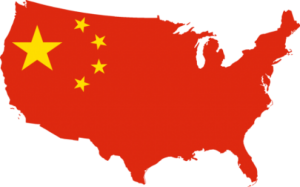
China is strategically positioning itself as the real superpower.  Many economists, pundits, and news media outlets would like to reduce China to an over-crowded, communist country with a one-child policy, and a pollution problem.  However, China has been meticulously calculative  and shrewd in their foreign affairs.

 America boasts about being the most mightiest nation on earth. However, we are faltering and requiring continuous infusions of dollars from the Federal Reserve to preserve economic stability.We’re struggling with a $17 trillion debt. We spend billions upon billions of dollars on defense, war, and national security. We’ve seen how Greece and other nations in Europe are struggling with austerity, and the crippling ripples of economic imbalance.  However, China has managed to stay above the monetary carnage, and remain independent of World Bank welfare.

China and Oil Trade

First, according to a New York Times article, China purchases approximately 1.5 million barrels of oil a day from Iraq.  The Chinese government is reportedly investing $2 billion dollars a year into Iraq.  They have constructed their own airport in the desert that borders Iraq and Iran.  The Chinese government uses the airport to fly their own oil workers into Iraq, and they are developing direct flights into Baghdad from Shanghai and Beijing.  The article even explains how China has trained their workers to speak Arabic with an Iraqi accent!  The U.S. eliminated Sadaam, but China really benefited.  Iraq is the 2nd biggest oil producer after the Saudis, according to OPEC.  This is beneficial to Iraq because they use oil revenue to fund military and other governmental operations.

China and the Rare Earth Metal Market

Many nations (including America) use rare earth metals and oxides like Neodymium, Praseodynium, and 15 other rare earth metals in that class to build your favorite iPhones, computers, tablets, and even our very own missile defense system.  Well, China controls 95% of the global trade of these rare earth metals.  This dynamic is not necessarily due to their economic acumen, but because most of these metals are geographically located in China!

However, China is aware of the need and demand for these metals in modern technology, and put an export quota on these precious minerals. This drove the stock prices soaring through the roof.  One of the major Chinese rare earth companies, China Nonferrous Metal Industry’s Foreign Engineering and Construction Company, is even building a new plant to increase production of the metals. This new plant is primed to produce ~7,000 tons of the metals per year. Their only real competition is an Australian company named the Lynas Corporation.  The demand is high as China has pumped out ~ 31,000 tons in one year.  Apple should keep relations nice and cozy!

China and South America’s Emerging Economy

China is also heavily invested in South America.  The Southern Pacific Review published an article this October.  The author, Walker Rowe, stated that Chile is looking for foreign investors, and has invited a Shanghai investment banking company to attend their International Investment Forum Chile 2014, which is scheduled for January 13-16 in 2014.  He reports that China already has 3 mining companies in Chile ( Jia He Wei Ye, Golden Resource, Sky Solar), and the National Development Bank of China is involved.  Moreover, Chile lacks the natural resources of oil, natural gas and coal on a sustainable scale.  China has already worked out plans to develop solar power for Chile.  According to the article, “Sky Solar is set to operate 75,600 solar panels over 42 hectares of desert”.  To put the cherry on top of the sweet deal, Chile signed a free trade agreement with China that exempts 97% of goods from import tariffs!!!

In Argentina, Lenovo (Chinese technology manufacturer) has partnered with an Argentinian based company named Newsan, in a tax-free locale called Tierra del Fuego, and are building computers, tablets, and other electronic devices.

The Aluminum Corporation of China has setup their copper mining operations in Toromocho, Peru. Brazil has allowed two Chinese car manufacturers (JAC and Chery) to build plants there.  They’re projecting to build at least 100,000 cars per year, per company.  Ecuador has reportedly signed a $1.4 billion dollar agreement with China’s ECSA mining company to operate its’ El Mirador copper mine. Bolivia has agreed to let China’s CITIC Guoan Group conduct research into Bolivia’s lithium and potassium reserves.  This is huge potential for the lithium ion battery market. The article stated that Bolivia has 10,582 square kilometers of salt flats, and that’s where the lithium reserves are located.

China and America

China has already taken over Detroit.  An article in Forbes Magazine by Gordon Chang describes how Chinese investors are purchasing property in bulk, by the hundreds.  The Dongdu International Group of Shanghai has already purchased the David Scott, and Detroit Free Press Buildings for $9.4 million in a September auction.  Over the past few decades there has been an influx of products that are stamped with  “Made in China”.  These products include various technologies, home furnishings, entertainment consoles, and yes the Nike Airs that teenagers die over.

Unfortunately, China is aware of America’s financial status and has repeatedly vocalized trade concerns over the growing impotency of the American Dollar, and whether to even honor it.

China and Africa

Anybody that follows geopolitical events and economics, knows that Africa has become the global kiosk for natural resources.  I wont go in depth about this, I’ll encourage you to read an article I posted about Africa on BlackBlueDog.com

Conclusion

In conclusion, China does an amazing job at remaining neutral in global conflict.  This semi-congenial approach allows them to establish amicable rapports internationally to their economic benefit.  Their global posture permits them to conduct trade agreements with countries that have an aversion to U.S. foreign policy.  Where do you think we fit in this as African Americans?? America can take notes from China, ……and obviously, I should have asked Santa for the Mandarin edition of Rosetta Stone for Christmas. Peace!!