 By: Dr. Samori Swygert
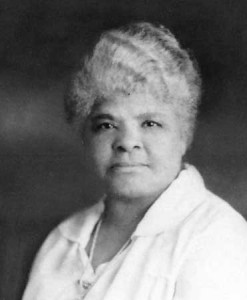
Ida Bell Wells-Barnett is one of the most prolific African Americans in the annals and chronicles of United States History. Many people are familiar with her, and conversely, many people are unfamiliar with her. With that being said, allow her to receive her kudos, accolades, and acclaim today.
Ida B Wells was born a slave in 1862 in Holly Springs, Mississippi. The nation was already deeply submerged in the Civil War. She would eventually be orphaned because her parents fell victim to the 1878 Yellow Fever outbreak. She demonstrated her courage and independence by supporting herself and siblings as a teacher in Tennessee, and Mississippi up into the age of 29.
You’ll see that Ida B Wells was a trailblazer of African American nonviolent civil disobedience. She demonstrated her disdain for the unjust discriminatory practices that were rampant throughout numerous American institutions. According to my reading, “in 1884 she filed a civil rights lawsuit against the Chesapeake, Ohio, and Southwestern Railroad for forcing her to give up her seat, the second African American after Sojourner Truth to do so”. Sounds eerily reminiscent to Rosa Parks and others right? She did receive money from the case, but the case was later overruled.
The pen is mightier than the sword
Ida began writing volumes upon volumes of articles, editorials, and essays addressing the atrocities and violations that African Americans experienced throughout the period of Reconstruction and beyond. Her pseudonym/pen-name was “Iola”.
She wrote for: The Living Way, Free Speech and Headlight, The New York Age, and countless other newspapers of the day. She was the editor of Free Speech and Headlight for 3 years.
Ahead of her time, she practiced the economic strategy of Boycotting to combat the injustices exacted upon African Americans. This started when 3 of her close friends were “hung from trees, their bodies mutilated, on the outskirts of Memphis”. March 9th 1892, Thomas Moss, Calvin McDowell, and William Stewart were the victims of this event. Thomas Moss was slaughtered because he operated a competitive and thriving grocery store across the street from a white-owned grocery store. Thomas’s flourishing business was viewed as an economic threat during Reconstruction.
Ida B Wells redirected that pain and anger into voluminous piercing writings instructing blacks to leave Memphis. She wasn’t as successful as hoped, however that didn’t thwart her mission. She then called for a boycott of the streetcars that operated in Memphis. Reports say “over 2,000 blacks left Memphis, while the streetcars were almost bankrupt by the end of the summer”.
The gravity and impact of the boycott reverberated throughout Memphis and enraged the local white population. They retaliated by incinerating her newspaper office to ashes. Subsequently she absconded to the North.
Undeterred from the attack, she converted the threat into a fuel source for more passionate writings. Their threats only emboldened her mission. She conducted research into hundreds of nationwide lynchings and this generated her book. Her book was entitled, A Red Record: Tabulated Statistics and Alleged Causes of Lynching in the United States, 1892-1893-1894. This is considered the first statistical database of lynchings. The book debunked the postulated propagandized beliefs of the wild, s*x crazed black men like the movie, BIRTH OF NATION by D.W. Griffith, portrayed about black men. The movie’s intention was to scare white women, incite hate into white men, vilify African Americans, and justify the killings of African Americans.
Ida B Wells’s book infuriated the white demographic so much so they made a public announcement. Here is the quotation: “If the negroes themselves do not apply the remedy without delay it will be the duty of those whom he has attacked to tie the wretch who utters these calumnies to a stake at the intersection of Main and Madison Sts., brand him in the forehead with a hot iron and perform upon him a surgical operation with a pair of tailor’s shears.”
Shaming the nation into submission
Once again she converted all threats to fuel. She traveled to England, Scotland, and Wales in 1893. She vigorously broadcasted the grotesque inhumanities suffered by African Americans in an anti-lynching crusade. Frederick Douglass even published a formal public praise of her diligence in reforming the violent inhumane practices within America.
Time to organize
Ida B Wells was also a cofounder of the NAACP, and is said to have bumped heads with Booker T Washington and other members because she was considered too radical/militant. Eventually the NAACP excused her from leadership. Her service continued, she organized the Negro Woman’s Club of Chicago. She founded the National Association of Colored Women in 1896. She founded the Negro Fellowship League. She founded the Alpha Suffrage Club in 1913. The Alpha Suffrage Club’s aims were to stimulate the move for voting rights of African American women, and debunk the general white woman’s suffrage movement apprehension of African American men receiving voting rights before them.
She married a lawyer and editor, Mr. Ferdinand Barnett, they had 4 children. Even though she was married with 4 children, she traveled through Illinois, Arkansas, and Ohio addressing the race riots that occurred, and fought against segregation in Chicago’s school system with Jane Addams. She also joined in with the Universal Negro Improvement Association (UNIA) established by Marcus Garvey.
What kind of coffee was she drinking? zheesh!
It’s imperative that we share these stories of courage with our youth, because African American history is being excluded in the educational curriculums across the nation. Each generation born is a generation that needs this knowledge. The only opportunity that this history is being conveyed is either at an HBCU, rare documentaries, black history month programs, or oral discourse from our elders that are passing away by the bulk in the 21st century.
Ida B. Wells Barnett REST IN PEACE (July 16, 1862- March 25, 1931)
Source:
- The African-American Century by Henry Louis Gates, Jr., and Cornel West, 2000
- Fifty Black Women Who Changed America by Amy Alexander, 1999
- Great African American Women by Darryl Lyman, 2005