Tag Archives: oil

African resources in the crosshairs of global capitalism

african oil

African resources in the crosshairs of global capitalism

By: Dr. Samori Swygert

This month’s edition of Worth Magazine, a financial magazine, highlighted potential investments for 2014.  I reviewed some of the hotspots and focal points of investment.  The magazine highlighted Kenya and Mozambique as potential investment targets because of their untapped oil reserves.

I then researched the U.S. Department of the Interior, and the United States Geological Survey to correlate the magazine’s prospects with the data collected by America.  The wealth and resources of Africa are still abundant despite its’ history of plunder and pillaging.

Understanding the math

Before going any further, it’s important to understand the quantitative measurements that the data is reported in.

1 cubic foot= 28.3 liters

1 cubic foot= 7.6 gallons

1 barrel of oil= 42 gallons

1 barrel of oil= 5.6 cubic feet


These are important so that you have a relatable picture of the amount of volume in the reports that I’ve attached and sharing with you.

The technology

The U.S. uses high resolution satellite imagery, terrain analysis, and digital elevation models that allows them to calibrate the quantity of volume diamonds, and oil to be drilled or excavated.  Technically we can see what resources Africa has without actually being in Africa.  Think of it like a sonogram.  With a sonogram, you can see the image of the baby without having to actually enter the womb of the mother, you simply slather a little “jelly on the belly”, scan and view.


Diamonds are forever

A November 2012 fact sheet published by the United States Geological Survey reported that in Se’gue’la, Africa, there was a total of 10,100,100 carats of diamond deposits that have yet to be excavated.  Tortiya, Africa has a diamond reserve deposit of 1,100,000 that has yet to be excavated.  These two sections of Africa are located along the Ivory Coast.  The engineering, aerospace, luxury, and healthcare industries have many uses for diamonds, and I have no current updates of the amount of diamonds after this 2012 report.

The above info can be found here:  http://pubs.usgs.gov/fs/2012/3130/pdf/fs2012-3130.pdf


Slicker than oil

It is only logical that the U.S. engages in oil prospects as our demand for oil increases, and we try to become independent of OPEC for national operations.  This is why the Keystone Pipeline is the Big Steak on America’s dinner table.  African oil reserves are abundant and plentiful.  You may be wondering how plentiful right?


4 West African Provinces were analyzed and the results are jaw dropping.  America assessed the surrounding areas of Senegal, the Gulf of Guinea, the Niger Delta, the West-Central Coastal areas.  The survey estimates 71.7 billion barrels of oil, 187.2 trillion cubic feet of natural gas, and 10.9 billion barrels of natural gas liquids.  These were untapped and unexplored.  http://pubs.usgs.gov/fs/2010/3006/pdf/FS10-3006.pdf

Libya and Tunisia were analyzed in a 2010 geological survey.  The report furnished the following results:  3.97 billion barrels of undiscovered oil, 38.5 trillion cubic feet of undiscovered natural gas, and 1.47 billion barrels of undiscovered natural gas liquids.

 http://pubs.usgs.gov/fs/2011/3105/pdf/FS11-3105.pdf

 4 East African Provinces were analyzed.  The following areas were assessed: the Tanzania Coastal, the Seychelles, the Morondava, and the Mozambique coastal region.  The following results were reported by the United States Geological Survey: 27.6 billion barrels of oil, 441.1 trillion cubic feet of natural gas, and 13.77 billion barrels of natural gas liquids. 

http://pubs.usgs.gov/fs/2012/3039/contents/FS12-3039.pdf

 8 North African Provinces were analyzed.  The following areas were assessed: the Nile Delta Basin, Sirte Basin, Pelagian Basin, Trias/Ghadames Basin, Hamra Basin, Illizi Basin, Grand Erg/Ahnet Basin, and Essaouira Basin.  The following results were reported by the Geological Survey:  19 billion barrels of technically recoverable undiscovered conventional oil, and  370 trillion cubic feet of undiscovered conventional natural gas resources.

http://pubs.usgs.gov/fs/2012/3147/FS12-3147.pdf


It’s imperative that African nations are aware of the resources they possess.  The data retrieved by the survey didn’t involve invasive or diplomatically approved exploration, because this was conducted by satellite imagery and other methodologies.  Major technological advances and resources should be developed and made available to these African nations to extract these valuable resources in a safe and efficient manner.  The leaders of these nations must be very astute in their negotiations when granting exploratory and mining licenses to avoid exploitation which has been a repetitive, redundant, and recurrent theme in Africa’s history.  This is a tremendous bargaining chip for many of these nations.


This is also important considering the “mentioned” sanctions by the Obama administration of many African nations.  Food, medical and other aide is being held ransom-like by the U.S. for some African nations for failure to adopt or endorse homosexuality into their countries philosophy.   Also, are there potential business opportunities between African Americans and fellow Africans in the Motherland?

Click here so see that:

  1. http://www.forbes.com/sites/mfonobongnsehe/2011/12/09/obama-fights-nigerian-anti-gay-bill-threatens-to-cut-off-aid/
  2. http://www.bbc.co.uk/news/world-africa-23078655
  3. http://www.theguardian.com/world/2011/dec/07/gay-rights-us-aid-criteria
  4. http://www.washingtontimes.com/news/2013/jun/27/obamas-call-tolerance-gays-gets-cold-shoulder-afri/?page=all


What are your thoughts on the wealth of Africa’s resources and its’ global potential?

Dr. Samori Swygert: Is Africa for sale?

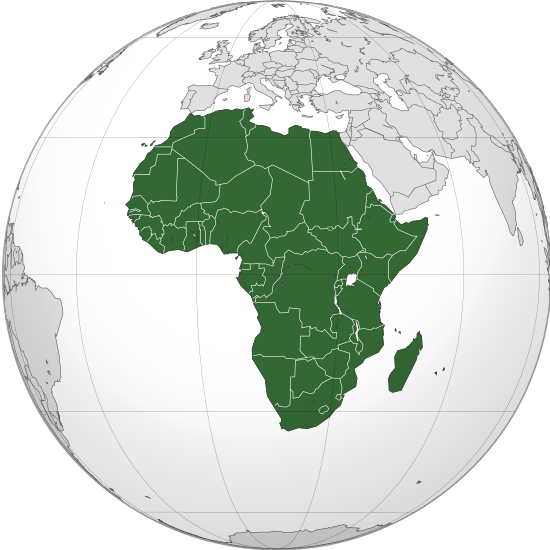
africa on globe

Dr. Samori Swygert:  Is Africa for sale?

Africa, THE MOTHER LAND, has been the “cradle of civilization”, and is still the placenta of global economics.  Africa is revered as the continent where life first started, and the birthplace of math, science, spirituality, and philosophy.  However, the allure and fascination with this continent among foreign nations is the abundance of wealth and resources it contains.

Historically speaking, Africa has been the target of conquest and domination.  This statement is best illustrated, and supported by the usurpation of land, and slaughter of the Zulu tribe of South Africa by the European Voortrekkers, King Leopold of Belgium, and Cecil Rhodes.  I will go in depth about these endeavors in a part 2 follow up to this post, because it’s too lengthy.

Let’s fast forward into the 20th and 21st centuries. First, to gain perspective of extent and enormity, 1 metric ton equals 2,204 pounds, and 1 standard ton equals 2,000 pounds.  March 1st 1984, the New York Times published an article that detailed a discussion with Clive Knobbs, the Vice President of the Chamber of Mines in Johannesburg.  Knobbs said that gold production would peak at 792 tons per year by the end of the decade.  He reported that South Africa had produced 750 tons of gold in the previous year, and that production would drop to 560 tons of gold by 2005.  Keep in mind this was in 1984.1

In Zambia, Africa, companies are now repairing the railroad lines to ship copper to South African ports for export.  Zambia is the continent’s largest producer of copper.  According to an article in Bloomberg news, they want to upgrade 746 miles of railway.  Copper is used for pipes, wires, and cables.  They are projecting output to reach 1.1 million metric tons of copper annually by 2015.   In 1975 Zambia produced 6 million tons of copper.  The deterioration of the railways accounted for a decrease in exportation.  In 2009 exportation declined to 690,000 tons of copper from Zambia.  Currently in 2013, Zambia Railways has increased the number of trains for transport to 68, and thus project 1.1 million tons of copper for export.  The majority of the mines in Zambia are Chinese owned.2

In Nairobi, Kenya, the United Nations Educational Scientific and Cultural Organization (UNESCO), and Radar Technologies International discovered enormous water aquifers.  The report revealed that a minimum reserve of about 66 Trillion gallons of water resides below Kenya.  They also reported that precipitation in Kenya and Uganda replenishes them with approximately 898 billion gallons of water annually.  They have so far discovered 5 aquifers.  The Lotikipi Basin Aquifer is approximately the size of Rhode Island, another is named; Lodwar Basin Aquifer.  The other three are still being prospected.   Kenya, the United Nations, and Japan are in talks about how to use this for irrigation for the Kenyan people and other uses (other uses?).3

The Democratic Republic of Congo in Africa is pregnant with Tin, Tungsten, and Tantalum.  These three metals are used in the manufacturing of smart phones, digital cameras, and laptops.  These metals are being exported in a manner reminiscent to Blood Diamonds.  The drive to procure these metals caused U.S. lawmakers to introduce acts similar to the Kimberley process for diamonds.  The name of the acts are; The Congo Conflict Minerals Act, The Extractive Industries Transparency Disclosure Act, and The Dodd-Frank Law.  These acts mandate that major electronics corporations like Apple, Samsung, Nokia, Nintendo and others disclose the specific mines they receive their Gold, Tin, Tungsten, and Tantalum from.4 The Congo has also quadrupled their gold output over that last 5 years, and has produced 26 metric tons of gold in 2012 alone.

Kinshasa is the capital and largest city of the Democratic Republic of the Congo.  Kinshasa was previously named Leopoldville, after the violent Belgium conqueror King Leopold.  Currently Kinshasa and Zambia have some of the largest Cobalt mines, and China is prospecting these Cobalt sites for mining and extraction.  According to the 2011 United States Geological Survey, between 2009 and 2013, more than 100,000 tons of cobalt is being extracted per year.  Cobalt is one of the most unique and necessary metals of our time.  Cobalt has unique strength and thermal stability, and is thus used as alloy in turbines, batteries of cell phones, laptops, electric and hybrid car batteries, and munitions.5

Lastly, the United States has established drone bases in West Africa, North Africa, and East Africa under AFRICOM (Africa Command arm under the Pentagon).  The U.S. military operations expands into Niger, Djibouti, Ethiopia, and has opened a drone base in the Seychelles off the African coast to conduct further East African surveillance.  Furthermore, President Obama has pledged $7 Billion over the next 5 years to 8 countries (Ethiopia, Ghana, Kenya, Liberia, Nigeria, Tanzania, Uganda, and Mozambique).  The ultimate goal in accordance with the International Energy Agency is to have universal electricity access to the Sub-Saharan region by 2030.  The final price tag is estimated to be $300 Billion.6

Moreover, The Gates Foundation has formulated, and executed a vaccination campaign in Africa.  Their goal is to eradicate Polio, by using satellite photography and GPS to find all their targeted villages and dispense oral Polio vaccines to the people.7   Bill Gates has pledged $1.8 Billion by 2018 to accomplish this campaign, and his subsequent campaign will be to target Malaria in a similar protocol.  Bill Gates has also partnered with Monsanto (purchased 500,000 shares of Monsanto stock) and other biotech giants to map, sequence, and analyze the genomes of African fruits, vegetables, and plants.  The aim is to battle malnutrition, famine and address concerns about agricultural sustainability in the African continent.

Take Home Message

Honestly, I’m somewhat skeptical and cynical about the various foreign endeavors into the African continent.  I’m also aware of the malfeasance and corruption that goes on inside some of the African nations.  However, I see a silent reincarnation of imperialism and colonialism happening under the guise of philanthropy, humanitarianism, and benevolence.  Terms like “sustainability” and “infrastructure” cater to receptive ears, because the continent does need these improvements.  However, with the vast amounts in exports of raw material, African people are still impoverished in many nations, but the multinational companies are getting filthy rich.  The lifestyles of the African people has not been ameliorated or improved from the wealth they possess.  I also have my own concerns about biotech industries and the African people, but that will be discussed in a future post. Africans in America and abroad should return to the continent, and show the people how to use the materials that are exported.  The continent can then competitively manufacture the same products for retail in global commerce as China, and own the resources.

References

  1. http://www.nytimes.com/1984/03/01/business/south-africa-gold-view.html
  2. http://www.bloomberg.com/news/2013-05-14/rail-revival-is-lifeline-to-biggest-africa-copper-mines-freight.html
  3. http://www.nytimes.com/2013/09/12/world/africa/aquifers-discovered-in-drought-ridden-kenya.html?_r=0
  4. http://www.huffingtonpost.com/janet-ranganathan/tin-tantalum-and-tungsten_b_255982.html
  5. http://pubs.usgs.gov/sir/2011/5084/
  6. http://www.nytimes.com/2013/07/16/opinion/powering-africa.html
  7. http://www.politico.com/story/2013/05/bill-gates-congress-91090.html