ARE HBCUs STILL RELEVANT? YES!
By Samori Swygert
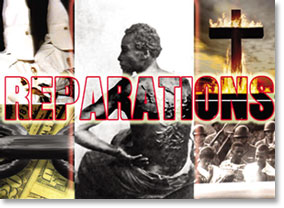
A question that will recurrently buoy to the educational surface is, “Are HBCUs still relevant?” My response is an emphatic and resounding yes! Before delving into the matter of their relevance, it is imperative for all participants in the discussion to have a firm historical perspective on racial policies in America. Prior to Brown vs. Topeka board of education, prior to Bull Connor, prior to the Little Rock 9, prior to separate but equal, it used to be illegal for African Americans to learn to read, and a book was considered contraband to slaves.
I would like to consider other facts in establishing my case. Slavery was abolished in 1865. The top notch universities that are still revered as elite institutions of education were functioning well before 1865. Harvard University was established in 1636, Yale University was established in 1701, Princeton University was established in 1746, Columbia University was established in 1754, Brown University was established in 1764, and Cornell University was established the same year as slavery was abolished, 1865. You must gain an accurate temporal relationship with these dates in correlation with the timeframe of slavery. These dates indicate that young white students were privileged enough to gain an education while blacks were concurrently enslaved! White students were afforded the head start, and momentum to create and contribute to the society blacks were still seeking freedom and rights in. The irony of the existence between these two institutions continued for well over a century. While some young white adults were being educated in science, math, literature, politics, engineering, and the arts in a comfortable environment, black children and adults performed strenuous and laborious tasks under a harsh, violent, and unsolicited system. Learning was encouraged in these institutions of education, and learning was discouraged and denied in slavery, complete polar opposites.
When slavery was abolished and the reconstruction era started, it still was difficult for the newly freed slaves to thrive in this new society. Despite their new found freedom, admission into institutions of higher learning was still denied and the sheer cost alone was almost impossible. How were African Americans able to gain an education on a mass scale to compete with their white counterparts in society?
There are many stories and cases of blacks that matriculated into Ivy League schools overtime. However, there was no single institution that facilitated the mass education of African Americans until Historically Black Colleges and Universities (HBCUs). The movement to create institutions specifically geared toward the education of blacks across the country empowered the African American race, and propelled them forward. Once afforded this opportunity to learn, it fostered a change in their lifestyle because they gained the competence and confidence to compete, and take command over their own destiny. HBCUs gave blacks more independence. African Americans did not have to attend traditionally white institutions in order to gain a degree. The obstacles on their road to progress began dwindling. Time proved that blacks were just as educable, competitive, innovative, and intelligent as whites. The deprivation and denial of resources, time, land, and money was the only difference. A classic historical example made evident was the debate team legacy of Wiley College portrayed in the movie, The Great Debaters.
The Journey Continues
As we continue down the timeline we’ll see black law schools, medical schools, dental schools, nursing schools, pharmacy schools, and business schools emerge, and an exponential production of well trained black professionals. The HBCUs began a legacy of greatness that compounded with each year of existence. They established a rich heritage of inspirational stories of triumph, and success that each black student can relate and aspire to. They are the true stories and examples of “pulling yourself up by the boot strap”.
But why an HBCU?
The key attribute about HBCUs is that they tell students they can make it. Yes, HBCUs will take those high scholastic performing students, and they will also take that borderline student and hinge their bets on that borderline student’s potential. It’s said that many African American students may not be afforded the opportunity to an Ivy League college due to stringently high academic criteria, theorized institutional bias, or the exorbitantly high cost of education. Whatever the reasons may be that some black
students don’t attend Ivy League or traditionally white institutions, HBCUs provide a unique empowering and educational haven for black success. If a student may be average, borderline, or insecure, the HBCU provides a positive identity for that student and a sense of pride.
A question of identity
In American History classes, students will hear about the brilliance of Benjamin Franklin, Thomas Edison, Albert Einstein, John Kennedy and more. So white students have symbols of success they can identify with. That identity encourages them to do better, or replicate their historical models of success. However, the under-emphasis of black success in American History classes may leave young black students feeling hopeless and devoid of any historical pride, and thus have low expectation and standards of themselves.
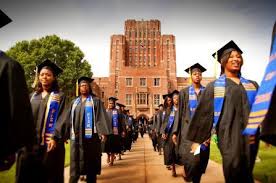
At HBCUs student will be in classes with peers of the same color, some of similar stories that they can relate to and share true inspiration and motivation to get through their journey. The second component of identity that HBCUs provide is within the history. Students are taught in University 101 about how blacks like themselves were able to achieve success despite the social odds against them. The students can look at George Washington Carver and say “a black man did all this”. The student can read about the life of Charles Drew and his medical achievements and say “that was a black man”. They can look at Black Greek Letter Organizations and see the positive power in the unity of young blacks that are devoted to one common cause. Students can walk the halls and see the statues of great blacks, and say “I’m much greater than the stereotypes and statistics that the media portrays”. They are surrounded by professors that have a concept of the racial struggle for equality for blacks, and thus have a genuine vested interest in giving the best education they can to further the posterity of each generation of students.
You can’t plead the same exact case for Ivy League and Non-HBCU institutions of higher learning. HBCUs reaffirm the greatness in the potential of every black student if provided that opportunity, because it gives them multiple frames of reference. The student can always look at past and recent historical black diamonds that may have just been a piece of coal that needed careful positive pressure. Since their inception to contemporary times, HBCUs have their niche and their need!
I cringe at the thought of all the talented black youth that have potential, but are not afforded the opportunity for higher education, and are sometimes temporarily or permanently locked out of a better way of life. I also cringe at the thought of the deprivation of such a rich cultural heritage that gives them an identity of greatness, and unlocks all their potential unbeknownst to them. Ivy League and other Non-HBCU institutions are great and an education in general is wonderful, but it’s my opinion that HBCUs provide a more holistic, nurturing education that compliments the needs of the black student. So are HBCUs still relevant? My answer is an emphatic and resounding, YES!! A more serious question to consider is this, “what would have happened to the millions of HBCU graduates that were not admitted to Non-HBCUs if HBCUs didn’t exist?”