Tag Archives: wallstreet

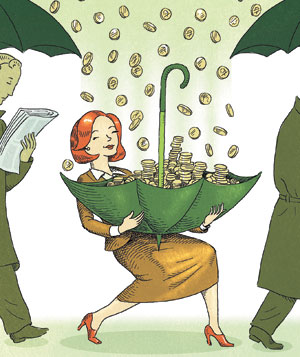
You know you can buy the weather

rain maker

You know you can buy the weather$$

By: Doc Swagg

We’ve been bombarded with a barrage of weird weather over the last few years.  We’ve been trying to adapt to the extremes in weather that proliferate both in and out of season.  We’ve also become acquainted with vocabulary that’s unfamiliar to our weather lexicon like:  Derecho, Polar Vortex, and Arctic Blasts.   We’ve witnessed the devastation of Hurricane Katrina and Sandy. We’ve also seen mudslides, droughts and uncontrollable wildfires.

What if I told you that you can make money off weather in a multi-billion dollar industry?  Would you invest?  Would you do further research into this?  Would you change your handling of money, knowing that even weather is for sale, and you are only a customer?

Let’s make it rain

Well truthfully people have been making money off the weather since early 2000.  There are what’s called Weather Futures.  The same way Wall Street conducts commodity trading of stocks, bonds, exchange traded funds and other financial capital, there is another entity called The Chicago Mercantile Exchange.  This is where weather futures transactions occur. Simply put, futures is a contract that allows a purchaser to speculate or bid on the future projected price of a supply or resource, and lock in that price when that time arrives.  This is good if you speculate properly.

This is the Chicago Mercantile Exchange link: http://www.cmegroup.com/

Let’s illustrate this for a better understanding.  Suppose the current price for a pound of sugar is $2.00, as a competitor in the candy industry, I see the demand for sugar increasing.  I can sign a futures contract to lock in a cost of $3.00 per pound in 2017.  2017 arrives and the demand for sugar is high like I predicted but the price of sugar in 2017 is actually $5.00 per pound.  Well I’ve just saved a lot of money by locking in a purchase price of $3.00 per pound where as my competitors pay market price of $5.00.  The down side is if I guess wrong and the future price drops, I’m then locked in a contract to pay $3.00 per pound and the 2017 price could be $1.50 per pound, so I’ve lost money.

Many weather futures bid on inches of rain fall, changes in temperature, snowfall and other variations of climate fluctuations.  This has tremendous financial implications.  Let’s extrapolate this knowledge into the American marketplace.  When it’s cold like we’ve been experiencing lately, we increase demand for heat, and thus it’s a boom in revenue for the oil industry.  When it’s extremely hot, we want air conditioning, and that is a big boom in revenue for utility companies.  How does this impact the farming and agriculture industry?

Farmers must strategically plan and protect their crop production and harvesting capabilities.  They must estimate rainfall, quantity of seeds, soil saturation, and more.  If I can follow the trend of global warming, then it may be wise for me to lock in seed prices based on predicted increases in temperature.

There are weather derivatives just like stock derivatives.  There are hurricane futures.  The weather futures market was estimated to be a $19 billion dollar market back in 2010.  The value has probably increased since then.


Striking 14 Carat “Cold”

All financial markets have forces that try to manipulate it for their financial gain.  You are probably wondering how this happens with weather.  Google the term “geoengineering”.  There are agencies that have been conducting atmospheric climate manipulation and modification.  This began with the experiments of Nikola Tesla (1856-1943) who created artificial lightening.

There was a bill that was submitted to congress called, THE WEATHER MODIFICATION RESEARCH AND TECHNOLOGY TRANSFER AUTHORIZATION ACT OF 2005, but the bill died.  The bill clearly explains the research used to artificially modify the weather, and the Department of Commerce was one of the agencies included in the bill.  Why would the Department of Commerce be included in this bill?  You have struck gold if you have the scientific and technological community able to modify the weather, and you have the capital to hedge on your future projections.

The proposed bill: https://www.govtrack.us/congress/bills/109/hr2995/text

Anyway, now you know if you didn’t already, that windfall profits (no pun intended) can be made by investing in weather.  Does this market encourage more geoengineering to increase profiteering in weather futures for individuals wealthy enough to participate in this form of hedging?

Some links below will fill in the blanks if you’re curious, and I’ve also included a video on weather derivatives from Bloomberg Business News.

http://business.time.com/2012/01/24/no-snow-no-problem-how-wall-street-profits-from-weird-weather/

http://edition.cnn.com/2009/LIVING/wayoflife/09/14/mf.get.rich.off.weather/

What are your thoughts on this?

http://www.youtube.com/watch?v=TuwuWPxUF-Q&sns=em


$$Wall Street speculates on kidney transplant market

kidneys transplantWall Street speculates on kidney transplant market

By: Dr. Samori Swygert

When people hear about selling your body, their psyche will typically project the image of prostitution or human trafficking.  However, the demand for human organs is at a premium, and the healthcare industry is poised to play as an active participant.

I had the opportunity to read a brilliant article by Gary Becker, and Julio Elias from the Wall Street Journal.  They elucidated the market demand, the associated reasons, and the parameters that will govern the economics of organ transplantation.

What are the facts?

According to Becker and Elias, the average waiting period for a kidney transplant is approximately 4.5 years.  The population of the kidney waiting list has basically doubled over 10 years from, 54,000 to 95,000 in 2012.  The list is inclusive of both genders, and all age brackets.  Individuals that have yet to receive a kidney remain on dialysis (a mechanized filtration system of the blood).  The average length of survival of a middle aged person on dialysis is approximately 8 years.  However, if blessed and afforded to receive a kidney transplant, their life expectancy gains another 24 years.  The authors of the article sadly reported that nearly 4,500 people died waiting for a kidney transplant in 2012.

“Time is money”

The sheer inconvenience of having to routinely schedule your whole life around numerous dialysis sessions can be overwhelming emotionally and mentally.  That in itself is an expense, the cost of peace of mind.  Well peace of mind is definitely disturbed with the actual monetary pricing of dialysis and kidney transplants.  Dialysis is a big ticket item on household budgets, because they average $80,000 per year.  You must then consider the 4.5 year wait time for receiving one.  That equation generates a figured expense of ~$ 350,000 from the cost of waiting alone.  The actual kidney transplant costs approximately $150,000, and you must still factor in the pharmaceutical expense for taking anti-rejection drugs for the kidney.

Maneuvering the market

To combat the wait time, save money, and save lives, many people and institutions are engaging in KIDNEY EXCHANGES.  This process facilitates and expedites the kidney donor/recipient matching process.  The problem is just finding a kidney, you must find a kidney that’s compatible with the blood type and tissue match of both recipient and donor, or the recipient’s body will reject it.

To meet the market demand for kidneys, proposals are being floated around for paying people for their kidneys.  Humans can live with one functional kidney, however many express reservations of parting with their organs.  The trepidation revolves around many reasons such as: fear of the risks associated with surgery, fear of lifestyle change, and time away from work.  To account for the fear, the authors propose a 3 month mandatory waiting period to allow donors to really think things through.

The price tag reported in the article ranges from a low of $5000 to a high of $15,000 per kidney.  The United States is not the only country considering this type of monetary-medical policy.  In fact, America is looking at its’ very own enemy, Iran, as a model.  Iran pays $4000 per kidney, and boasts a drastic reduction to virtual obsolescence of waiting times.

This costs an arm and a leg…or Kidney

The noted concerns in this new proposal is that this would construct a morally inhumane soliciting of the poor and disenfranchised.  The same way many individuals in financial binds will pawn items, or take out payday title loans, many people may turn to kidney donation as a financial solution.  Rather than donating a kidney to be physiologically philanthropic, individuals may resort to this. Economic climates like today, where unemployment is rampant, may provide an alternative means of revenue that wasn’t previously available.  The ultimate conclusion can be immense regret, especially considering that economics is a temporary and ever changing dynamic.  Kidney donation is very absolute and finite as opposed to sperm and egg donation where several reproductive cells are left.

Bottom line

In capitalism, everything is for sale, everything has a price, and everything can be negotiated.  Based on the capitalistic genetic makeup of America, I believe this will happen.  People must establish their own moral codes, altruistic/humanitarian philosophies, and system of priorities.  Organ donation is very noble, but I think you should do it for the right reasons.   Determine your reasons, be confident and comfortable with your choice.

Individuals should also note that the biotech industry is also developing body organs that are just like your internal organs.  This also brings the importance of good diet, health, and exercise.  These lifestyle modifications can cut down on the development of numerous conditions like kidney disease, heart conditions, and etc.

This seems like something that should be debated in Obamacare.  I can easily say that I received $15,000 for donating a kidney, but every year a person lives from my kidney should be tax deductible as per donating to life and reducing the strain on the United States Healthcare budget!  There are a lot of incentives and scenarios that should be reviewed if this system of pay for organs is approved.  We also must consider the loss in revenue from the medical device industry when the demand for dialysis drops.

Lastly, there would also have to be some regulatory commission to investigate if people were coerced into donations by Black Market Organ Harvesting operations, and the origin of kidneys to be sold in the market.  Also, why did the kidney waiting list double in 10 years?

Even Facebook sees opportunity

Facebook CEO Mark Zuckerberg has even thrown his hat in the ring to facilitate transplants using his database network.    http://abcnews.go.com/Health/abc-news-exclusive-facebook-tool-helps-organ-donors/story?id=16244991


Check out the source links and tell me your thoughts.

Sources

  1. http://online.wsj.com/news/articles/SB10001424052702304149404579322560004817176
  2. http://www.nytimes.com/2009/07/24/nyregion/24jersey.html?pagewanted=all&_r=0

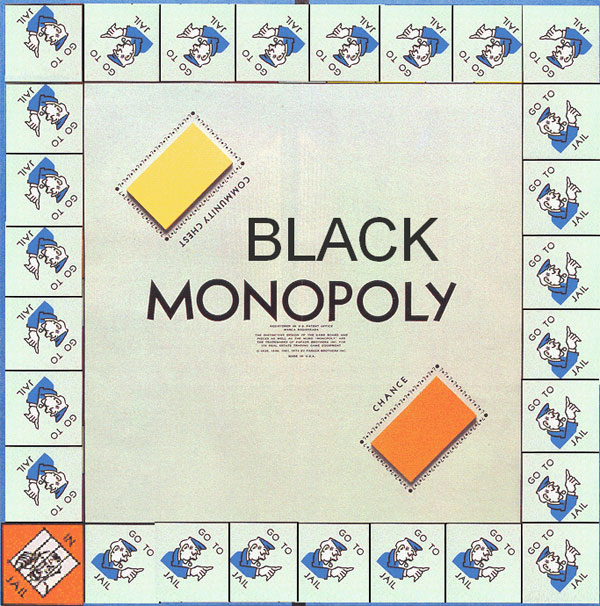
The reason companies are trying to buy up Detroit and Your Home Too

monopoly boardBy:  Dr. Samori Swygert

This week, an article was posted on YOURBLACKWORLD.NET, about an African American homeowner that lost his home due to unpaid property taxes.9 Investors are buying tax liens and obtaining ownership of residential properties nationwide.  This strategy is very disheartening to the unfortunate homeowners that may not be able to afford to pay their taxes for whatever reason.    This is compounded when we factor in urban renewal, gentrification, and gerrymandering of political districts.

There are hedge-funds, and private equity firms that are buying these properties by the bulk!  Their goal is to purchase as many homes possible, and turn them into single family rental homes.  These companies are not looking to sell the homes.  These firms are maintaining ownership and keeping them as rental assets.1

What does this mean?  This means there will be fewer residential properties available for you to purchase.  Land and homes are tools that generate wealth, because you can rent them as they are, also the monies you pay in mortgage go to actually owning property.  Renters can pay monthly rent and when the lease is up, you own zero.  Houses, land, and estates can be transferred to generations to manage, expand, use as collateral for investments, and convert into home businesses.

You can grow trees and plants, but you can’t grow earth, and this is the dilemma of the haves and the have nots.

Who are the players?

The largest private equity firm, The Blackstone Group (owners of the Hilton Hotel chain), Colony Capital LLC, Cerebrus Capital Management, Oaktree Capital Group LLC, KKR &Co, GTIS partners, Och-Ziff Capital Management LLC, and Waypoint Real Estate Group LLC are the main players in this game of real life Monopoly.1,3,4,5,8 However, there are small investment groups and individual investors that are participating in this “LAND GRAB”.  The head of The Blackstone Group, Stephen Schwarzman, is a heavy donor to Republican Superpacs.

What are they doing?

During the housing crisis, so many single family homes went into default, foreclosures, and homeowners went into bankruptcy.  Communities across America were decimated when the housing market crashed. Many homeowners had to perform short-sales to try and salvage any piece of investment and dignity of homeownership.  Many just walked away from their homes.  Now private equity firms such as Blackstone are buying all these foreclosed homes and tax delinquent residences by the bulk.3 The aims of these firms are to own the property, and strictly rent them to single families.   The Blackstone Group has been purchasing through foreclosure auctions, short sales and cash in hand buyouts from smaller local real estate companies.1,2,7

What are the facts and figures?

According to an article in Bloomberg News, Blackstone has spent more than $2.5 billion on 16,000 homes to manage as rentals from $13.3 billion it raised last year. Blackstone already owns $1 billion worth of homes in October 2012, and Blackstone chairman Stephen Schwarzman said that the company is spending $100 million a week on houses.1 The conversion of private property to single family rental homes is projected to be approximately a $3 Trillion market.7 Blackstone is currently the largest investor of single family homes for rent in the following 9 markets: Chicago, Northern and Southern California, Detroit, Miami, Tampa, Phoenix, Atlanta, and Las Vegas.1,3 Blackstone is also leveraging their strategy by getting a $600 million dollar line of credit from the Deutsche Bank.1,3To understand how strong Blackstone’s money is, they acquired Sam Zell’s Equity Office Properties Trust for $39 billion including assumed debt.A report by Keefe Bruyette & Woods, says that $ 6 to 8 Billion dollars can buy 40,000 to 80,000 properties.3

 DETROIT, MICHIGAN is the bulls-eye, and ground zero for these investors, and the individual investor.  The following case studies were published in a Bloomberg News article.2 A 32 year old man, Peter Grosso purchased 29 Detroit homes for $90,000.  Nate Heaps, a 32 year old investor purchased 290 Detroit properties for $189,600.  Sameer Beydoun, 33 years old, purchased 1,000 Detroit properties for approximately $5 Million with his investment group.  Jasmine Mc Morris purchased 332 Detroit homes and paid an average $2,500 per property and sells them to larger real estate investors.  There are even investors from England, Cambodia, China, and Australia that are buying into the market.2

I would like to inform our audience that there is a formal blueprint for Detroit that these investors are acting off of.  The name of the blueprint is Detroit Future City; this is a 50 year plan to bring Detroit back to recovery.2,6 The plan is to have green space and farms, and is assuming the Detroit population will drop to 615,000.2

Take Home Message

All individuals that own property need to keep their property.  We as African Americans need to practice group economics and purchase this land like Dr. Claud Anderson says.10 We need to talk with our parents and grandparents and make sure all taxes are paid. Parents don’t buy your son or daughter a car for graduation; purchase them some of these properties to own.  Lastly, we need to B.M.F., and not drug deal, but, B.M.F. (Buy. More. Foreclosures).  By owning these properties we can actually help struggling families regain wealth buy selling them at a fair market price, as opposed to just a system of rental Feudalism.

References

  1.  http://www.bloomberg.com/news/2013-01-09/blackstone-steps-up-home-buying-as-prices-jump-mortgages.html
  2. http://www.bloomberg.com/news/2013-01-16/bargain-homes-lure-buyers-worldwide-to-detroit-mortgages.html
  3. http://online.wsj.com/article/SB10000872396390443768804578034821658901916.html
  4. http://www.bloomberg.com/news/2013-05-09/cerberus-financing-landlords-wall-street-can-t-reach.html
  5. http://www.reuters.com/article/2013/03/28/us-cerberus-foreclosed-financing-idUSBRE92R0MK20130328
  6. http://www.businessweek.com/articles/2013-01-24/detroit-housings-for-sale-and-global-investors-want-in
  7. http://www.tampabay.com/news/business/realestate/blackstone-to-buy-1-billion-worth-of-tampa-bay-homes-for-rentals/1252624
  8. http://www.nytimes.com/2007/06/01/business/01subprime.html?pagewanted=print&_r=0
  9. http://www.yourblackworld.net/2013/09/black-news/elderly-d-c-resident-with-dementia-forgot-to-pay-134-in-taxes-and-lost-home/
  10. http://www.harvestinstitute.org/