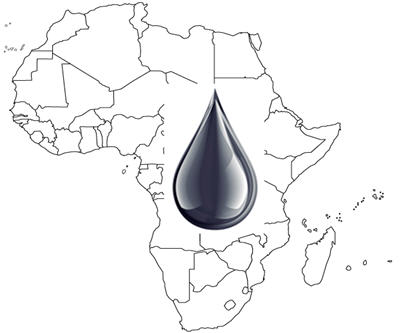
African resources in the crosshairs of global capitalism
By: Dr. Samori Swygert
This month’s edition of Worth Magazine, a financial magazine, highlighted potential investments for 2014. I reviewed some of the hotspots and focal points of investment. The magazine highlighted Kenya and Mozambique as potential investment targets because of their untapped oil reserves.
I then researched the U.S. Department of the Interior, and the United States Geological Survey to correlate the magazine’s prospects with the data collected by America. The wealth and resources of Africa are still abundant despite its’ history of plunder and pillaging.
Understanding the math
Before going any further, it’s important to understand the quantitative measurements that the data is reported in.
1 cubic foot= 28.3 liters
1 cubic foot= 7.6 gallons
1 barrel of oil= 42 gallons
1 barrel of oil= 5.6 cubic feet
These are important so that you have a relatable picture of the amount of volume in the reports that I’ve attached and sharing with you.
The technology
The U.S. uses high resolution satellite imagery, terrain analysis, and digital elevation models that allows them to calibrate the quantity of volume diamonds, and oil to be drilled or excavated. Technically we can see what resources Africa has without actually being in Africa. Think of it like a sonogram. With a sonogram, you can see the image of the baby without having to actually enter the womb of the mother, you simply slather a little “jelly on the belly”, scan and view.
Diamonds are forever
A November 2012 fact sheet published by the United States Geological Survey reported that in Se’gue’la, Africa, there was a total of 10,100,100 carats of diamond deposits that have yet to be excavated. Tortiya, Africa has a diamond reserve deposit of 1,100,000 that has yet to be excavated. These two sections of Africa are located along the Ivory Coast. The engineering, aerospace, luxury, and healthcare industries have many uses for diamonds, and I have no current updates of the amount of diamonds after this 2012 report.
The above info can be found here: http://pubs.usgs.gov/fs/2012/3130/pdf/fs2012-3130.pdf
Slicker than oil
It is only logical that the U.S. engages in oil prospects as our demand for oil increases, and we try to become independent of OPEC for national operations. This is why the Keystone Pipeline is the Big Steak on America’s dinner table. African oil reserves are abundant and plentiful. You may be wondering how plentiful right?
4 West African Provinces were analyzed and the results are jaw dropping. America assessed the surrounding areas of Senegal, the Gulf of Guinea, the Niger Delta, the West-Central Coastal areas. The survey estimates 71.7 billion barrels of oil, 187.2 trillion cubic feet of natural gas, and 10.9 billion barrels of natural gas liquids. These were untapped and unexplored. http://pubs.usgs.gov/fs/2010/3006/pdf/FS10-3006.pdf
Libya and Tunisia were analyzed in a 2010 geological survey. The report furnished the following results: 3.97 billion barrels of undiscovered oil, 38.5 trillion cubic feet of undiscovered natural gas, and 1.47 billion barrels of undiscovered natural gas liquids.
http://pubs.usgs.gov/fs/2011/3105/pdf/FS11-3105.pdf
4 East African Provinces were analyzed. The following areas were assessed: the Tanzania Coastal, the Seychelles, the Morondava, and the Mozambique coastal region. The following results were reported by the United States Geological Survey: 27.6 billion barrels of oil, 441.1 trillion cubic feet of natural gas, and 13.77 billion barrels of natural gas liquids.
http://pubs.usgs.gov/fs/2012/3039/contents/FS12-3039.pdf
8 North African Provinces were analyzed. The following areas were assessed: the Nile Delta Basin, Sirte Basin, Pelagian Basin, Trias/Ghadames Basin, Hamra Basin, Illizi Basin, Grand Erg/Ahnet Basin, and Essaouira Basin. The following results were reported by the Geological Survey: 19 billion barrels of technically recoverable undiscovered conventional oil, and 370 trillion cubic feet of undiscovered conventional natural gas resources.
http://pubs.usgs.gov/fs/2012/3147/FS12-3147.pdf
It’s imperative that African nations are aware of the resources they possess. The data retrieved by the survey didn’t involve invasive or diplomatically approved exploration, because this was conducted by satellite imagery and other methodologies. Major technological advances and resources should be developed and made available to these African nations to extract these valuable resources in a safe and efficient manner. The leaders of these nations must be very astute in their negotiations when granting exploratory and mining licenses to avoid exploitation which has been a repetitive, redundant, and recurrent theme in Africa’s history. This is a tremendous bargaining chip for many of these nations.
This is also important considering the “mentioned” sanctions by the Obama administration of many African nations. Food, medical and other aide is being held ransom-like by the U.S. for some African nations for failure to adopt or endorse homosexuality into their countries philosophy. Also, are there potential business opportunities between African Americans and fellow Africans in the Motherland?
Click here so see that:
- http://www.forbes.com/sites/mfonobongnsehe/2011/12/09/obama-fights-nigerian-anti-gay-bill-threatens-to-cut-off-aid/
- http://www.bbc.co.uk/news/world-africa-23078655
- http://www.theguardian.com/world/2011/dec/07/gay-rights-us-aid-criteria
- http://www.washingtontimes.com/news/2013/jun/27/obamas-call-tolerance-gays-gets-cold-shoulder-afri/?page=all
What are your thoughts on the wealth of Africa’s resources and its’ global potential?